
India’s electric vehicle (EV) sector is experiencing unprecedented momentum. After crossing the 2-million annual sales mark within the first 11 months, all four EV sub-segments—2-wheelers, 3-wheelers, passenger vehicles, and commercial vehicles—have already achieved their highest-ever yearly totals.
e-PV Segment Surges to New Heights
The electric passenger vehicle (e-PV) segment has recorded 160,740 units between January–November 2025, marking a robust 78% YoY growth (Jan–Nov 2024: 90,445 units). With December sales pending, the industry has already added 61,046 more e-PVs over CY2024’s total of 99,694 units.
Given the strong sales run and multiple launches over the past 10 months, e-PV retail sales are expected to reach 175,000–180,000 units in CY2025, setting a new benchmark for India’s zero-emission passenger vehicle market.
Out of 14 e-PV OEMs, nine have already surpassed their CY2024 totals within the first 11 months. Newer entrants—Vinfast, Tesla, and Maruti Suzuki—are still building traction.
OEM Performance Snapshot (Jan–Nov 2025)
1. Tata Motors – Market Leader, but Market Share Drops
Tata Motors remains No. 1 with 63,046 units, up 10% YoY. Though it has already crossed its CY2024 total (61,747 units), its market share has slipped to 39% (from 62% in CY2024), thanks to aggressive competition.
The newly launched Harrier EV has boosted monthly sales beyond 6,000 units for five consecutive months.
2. JSW MG Motor India – Strong No. 2
JSW MG has emerged as Tata’s strongest challenger with 47,574 units, up 165% YoY.
Its market share has climbed from 20% to nearly 30%, driven largely by the blockbuster success of the Windsor EV, bolstered by a Battery-as-a-Service (BaaS) offering.
New launches like the M9 MPV and Cyberster roadster have further strengthened its portfolio.
3. Mahindra & Mahindra – Explosive Growth
Mahindra has posted phenomenal 347% YoY growth, selling 30,191 units versus just 6,757 units last year.
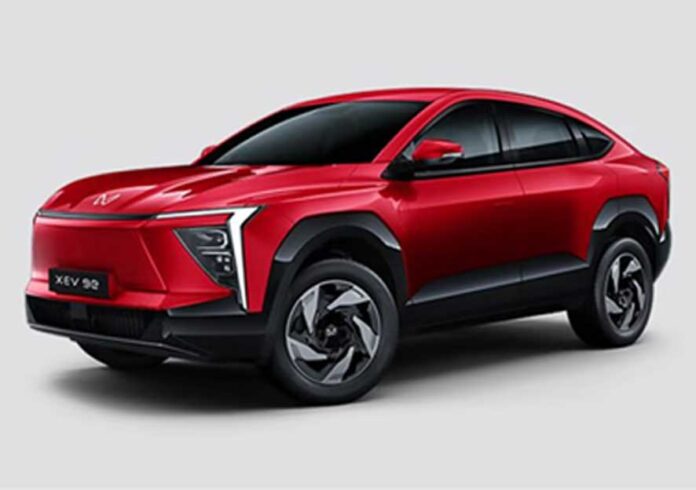
With a market share jump from 7% to 19%, the BE 6 and XEV 9e SUVs have accelerated its EV footprint.
The recently launched XEV 9S three-row electric SUV is expected to help Mahindra end CY2025 with around 34,000 units.
4. Hyundai Motor India – Big Leap, But Demand Tapers
Hyundai takes fourth place with 6,435 units, growing 621% YoY—thanks to the Creta Electric and Ioniq 5.
However, demand for the Creta Electric has moderated since March, despite contributing the bulk of sales.
5. BYD India – Doubling Growth
BYD has doubled its numbers with 5,122 units, fueled by the Sealion 7 SUV.
Its market share remains steady at 3%, the same as CY2024.
Luxury e-PV Segment – BMW Leads
BMW India leads the luxury EV segment with 2,837 units, up 164% YoY, supported by models like the i7, iX, i5, i4, iX1 LWB, and Mini Countryman E.
Overall luxury EV sales have grown 77% YoY to 4,558 units from Jan–Nov 2025.
Mercedes-Benz India Maintains Strong Momentum
Mercedes-Benz India delivered 1,087 units in the first 11 months, achieving 28% YoY growth and setting a new annual high even before December sales are added. The brand’s robust BEV portfolio—comprising the EQS 580, EQS 450, EQA 250+, EQB, Mercedes-Maybach EQS 680, and the G580 with EQ technology—continues to fuel its steady rise in the luxury EV market.
Kia India – Rising Fast
Kia has jumped from 10th position in CY2024 to No. 7, with 2,398 units (up 620% YoY).
The locally built Carens Clavis EV is the primary driver, outpacing its premium EV6 and EV9 imports.
Vinfast India – Strong Start
Vinfast has sold 429 units (VF6 & VF7) within just three months.
With 24 dealerships operational and 11 more planned, the company will launch the Limo Green seven-seater electric MPV in February 2026.
Tesla India – Slow Traction
Tesla has delivered 157 units of the Model Y across September–November.
As a fully imported CBU, pricing remains a key barrier to mass adoption.
What’s Next? CY2026 Looks Even Bigger
CY2025 will close on a record high, but CY2026 is expected to surpass it.
Maruti Suzuki will launch its first EV—the e-Vitara—in early 2026, following its January 2025 global unveil at the Bharat Mobility Expo. The model is expected to significantly expand the market, given Maruti’s mass-market dominance.
Conclusion
With strong product pipelines, aggressive new players, and expanding consumer demand, India’s electric passenger vehicle market is entering a new phase of rapid growth. CY2025’s expected 175,000–180,000 sales will mark a historic milestone—one that sets the stage for an even more electrified 2026.