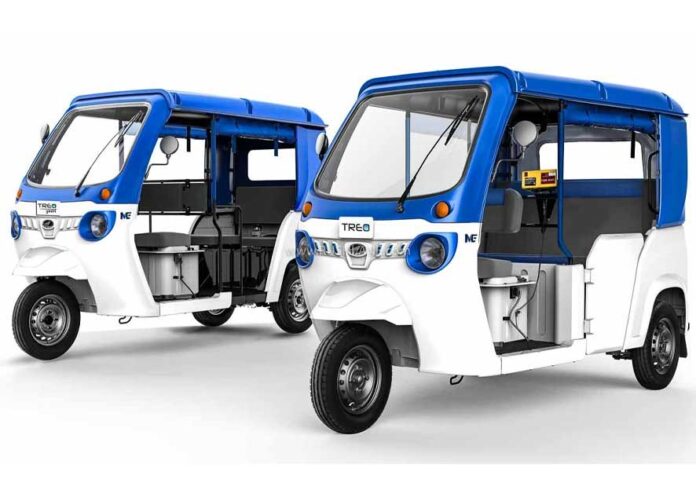
The Centre has withdrawn subsidies for electric three-wheelers after achieving its targets under the PM E-DRIVE scheme, signalling the segment’s growing maturity. According to a report by The Times of India, the government had planned support for 2.9 lakh electric three-wheelers, a target that has now been met.
Officials cited strong adoption levels as the key reason for the decision, with electric vehicles accounting for nearly 32 per cent of total three-wheeler sales—well within the government’s original target range of 20–30 per cent. With this milestone achieved, the Centre is expected to step back, allowing state governments to take the lead in driving further adoption through local incentive schemes.
In contrast, the electric two-wheeler segment continues to lag, with EV penetration estimated at just 7.5 per cent. Given the slower uptake, government support for electric two-wheelers is likely to continue into the next financial year. Several states are already evaluating independent incentive programmes to accelerate adoption.
Electric buses and trucks see slow traction
Demand for electric buses and trucks under the PM E-DRIVE scheme remains subdued, as many models are still undergoing testing and validation. The government has earmarked incentives for 14,000 electric buses and 5,643 electric trucks, but industry executives point to charging infrastructure as a major bottleneck. Wider participation from private charging service providers will be critical to unlocking demand in these segments.
Three-wheeler industry eyes 7% growth in FY26
India’s three-wheeler market is expected to grow by around 7 per cent in FY26, supported by steady month-on-month demand and a boost from festive season sales. Industry analysts project mid-single digit growth of 5–6 per cent in the second half of the fiscal, mirroring trends seen in the first half.
Data from the Society of Indian Automobile Manufacturers (SIAM) shows wholesale dispatches rose 5.5 per cent year-on-year in the first half of FY26 to 3,94,450 units, driven largely by strong sales in July.
PM E-DRIVE delivers 1.13 million EVs in first year
Despite offering lower per-vehicle subsidies than the earlier FAME II scheme, PM E-DRIVE has delivered strong results. A study by the Council on Energy, Environment and Water’s Green Finance Centre (CEEW-GFC) revealed that the scheme enabled sales of 1.13 million electric vehicles in its first year—3.4 times higher than annual volumes achieved under FAME II.
The per-unit incentive under PM E-DRIVE was reduced to ₹5,000 per kWh, roughly half of the FAME II subsidy. India’s automotive sector currently contributes 7.1 per cent to GDP and supports over 30 million jobs. EV sales have surged from just over 2,000 units in FY15 to nearly 1.96 million units in FY25, taking overall EV penetration to 7.49 per cent.