
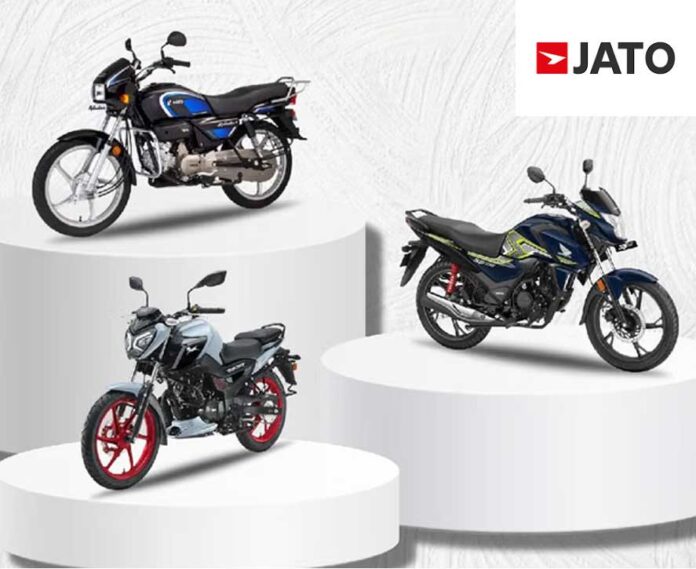
India’s two-wheeler market registered around 1.92 million units in April 2026, recording a 12.9% year-on-year growth, according to data released by JATO Dynamics India. Compared to March 2026, however, registrations declined by 2.3%, reflecting the usual slowdown seen after the financial year-end buying rush.
JATO Dynamics India noted that the April performance highlighted sustained retail demand across urban and rural markets despite softer sequential volumes. The company said the industry entered FY27 on a stable note, supported by improving consumer sentiment, consistent financing availability, and improved product supply.
Commenting on the market trend, Ravi Bhatia said the April figures reflected a mature and predictable market pattern. He added that while the month-on-month dip was seasonal and expected, the strong year-on-year growth on an already high base demonstrated continued momentum in the sector.
Hero MotoCorp retained its position as the country’s largest two-wheeler manufacturer in April with registrations exceeding 5.52 lakh units, followed by Honda with more than 4.72 lakh units. TVS Motor Company posted year-on-year growth of over 18%, while Yamaha also recorded higher registrations during the month. Suzuki, however, witnessed a slight decline.
At the model level, the Hero Splendor Plus remained the highest-registered two-wheeler in the country, while the Honda Activa continued to lead the scooter segment ahead of the TVS Jupiter. The Bajaj Pulsar maintained its position as the leading sporty commuter motorcycle.
Motorcycles accounted for nearly 59% of total registrations in April, while scooters contributed around 30%. Electric scooters represented close to 9% of total registrations, reflecting steady growth in EV adoption within the two-wheeler segment. JATO added that mopeds, premium motorcycles, and electric motorcycles continued to remain relatively niche categories with lower sales volumes.
Among cities, Delhi emerged as the largest two-wheeler market during April, followed by Bengaluru and Pune. Chennai and Mumbai also ranked among the top markets despite increasing urban congestion and ownership costs. At the state level, Uttar Pradesh led registrations, followed by Maharashtra, Tamil Nadu, and Bihar, underlining broad-based demand across the country.