
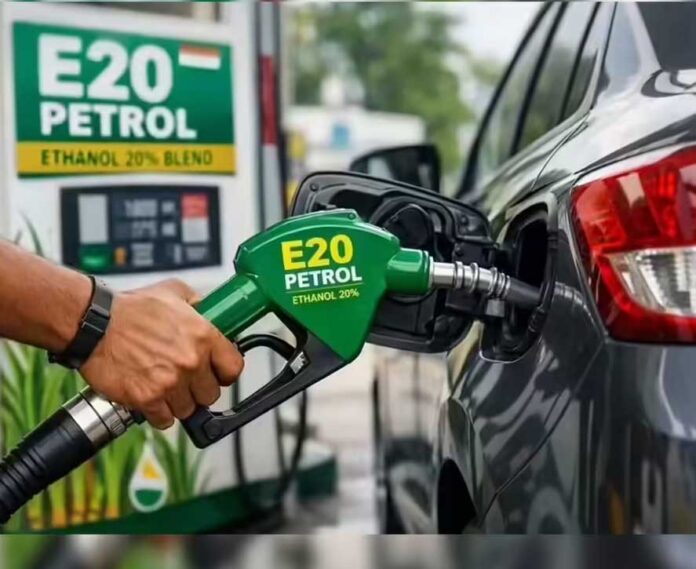
Concerns over the impact of E20 (20% ethanol-blended) petrol on vehicle engines remain largely unsubstantiated, according to fuel dealers and industry experts, who maintain that there is no credible evidence linking the fuel to engine damage.
Sanjay Lath, General Secretary of the Utkal Petroleum Dealers’ Association, said that none of the customers at member fuel stations have reported engine damage attributable to E20 fuel since its widespread rollout. While acknowledging concerns circulating on social media, he noted that those making such claims have yet to present any verifiable evidence.
“E20 fuel has been supplied across the country since October-November 2025, and from April 1, 2026, the government made it mandatory for all oil marketing companies and private fuel retailers to sell only E20 petrol. Despite concerns raised on social media, we have not received any customer complaints regarding engine damage due to E20,” Lath said.
He added that while studies conducted by three institutions have examined the long-term impact of E20 fuel, their findings primarily indicate that certain older vehicles may experience gradual wear in rubber components over extended periods. However, he emphasized that there is currently no conclusive evidence showing that E20 causes engine damage.
Experts Debunk Common Myths
Speaking during a media briefing in Mumbai, senior energy sector veterans also sought to address misconceptions surrounding India’s E20 fuel programme.
R. Ramachandran, former Director (Refineries) at BPCL, said extensive laboratory and institutional testing indicates that E20 has only a marginal impact on fuel efficiency. He explained that noticeable variations in mileage are often influenced by factors such as vehicle age, maintenance condition, driving habits, traffic congestion, and overall engine health rather than ethanol blending itself.
Raj Kumar Dubey, former Chairman of IGL and former Director at BPCL, pointed out that Indian motorists have already been using ethanol-blended petrol for more than a year without significant issues. He urged consumers to rely on scientific studies and certified testing agencies rather than anecdotal claims circulating online.
The experts also addressed concerns regarding ethanol production and water usage. Ramachandran noted that modern ethanol production facilities employ advanced water recycling systems and operate with near zero-liquid-discharge processes, significantly reducing freshwater consumption compared to conventional assumptions.
Economic and Environmental Benefits
Beyond technical concerns, the experts highlighted the broader economic advantages of ethanol blending. According to Dubey, the E20 programme helps reduce India’s dependence on imported crude oil, shielding consumers from global oil price volatility while generating substantial foreign exchange savings estimated at ₹1.8 lakh crore to ₹1.9 lakh crore. The policy also provides a significant boost to domestic agriculture by creating sustained demand for sugarcane and grain-based feedstocks.
Industry Perspective
Commenting on the debate, Anuj Agarwal, Founder and Chairman, Sunbridge BioEnergy, said the government’s recent clarifications are essential in separating facts from misconceptions surrounding ethanol-blended fuels.
“Ethanol today is much more than a blending fuel—it is a strategic contributor to India’s energy security, rural economic development, and sustainability ambitions. Modern grain-based ethanol facilities operate with advanced water management technologies that significantly reduce freshwater consumption, while also creating value for farmers and strengthening domestic energy resilience.
Even in an extreme hypothetical scenario where ethanol replaced India’s entire annual petrol consumption, the direct industrial freshwater requirement would amount to only around 0.01% of India’s average annual water resources. At the current 20% blending level, the requirement is only a fraction of this. Responsible water management, technological innovation, and fact-based conversations should guide the discussion as India advances its renewable fuel agenda.”
As India continues expanding its ethanol blending programme, industry stakeholders maintain that public discourse should be guided by scientific evidence, validated testing, and technological advancements rather than unverified claims, while recognising the role of ethanol in enhancing energy security, supporting rural livelihoods, and reducing dependence on fossil fuel imports.