TVS Motor Company introduced the Orbiter V1 electric scooter on March 12, 2026, with a starting price of ₹49,999 (ex-showroom Delhi, including the PM e-Drive subsidy) under a new Battery-as-a-Service (BaaS) model. Without opting for BaaS, the scooter is priced at ₹84,500 under the same subsidy conditions. The launch was announced in Lucknow and simultaneously disclosed to both the Bombay Stock Exchange and the National Stock Exchange of India.
The BaaS model marks a shift in how the company is structuring EV ownership. Instead of paying the full vehicle cost upfront, buyers can subscribe to battery usage through a monthly plan. Subscription pricing begins at ₹862 per month and includes an extended warranty of up to five years or 70,000 km, along with unlimited monthly usage during the subscription period. TVS has made the BaaS option available across its electric scooter portfolio, which also includes the TVS iQube.
The Orbiter V1 is equipped with a 1.8 kWh battery that delivers a certified IDC range of 86 km per charge. Charging from zero to 80% takes approximately two hours and 20 minutes, positioning it as a practical option for everyday urban commuting. The model joins the existing Orbiter V2 variant, which features a larger 3.1 kWh battery and was introduced last year. With the V1, TVS now offers two Orbiter variants targeting different price points and range requirements.
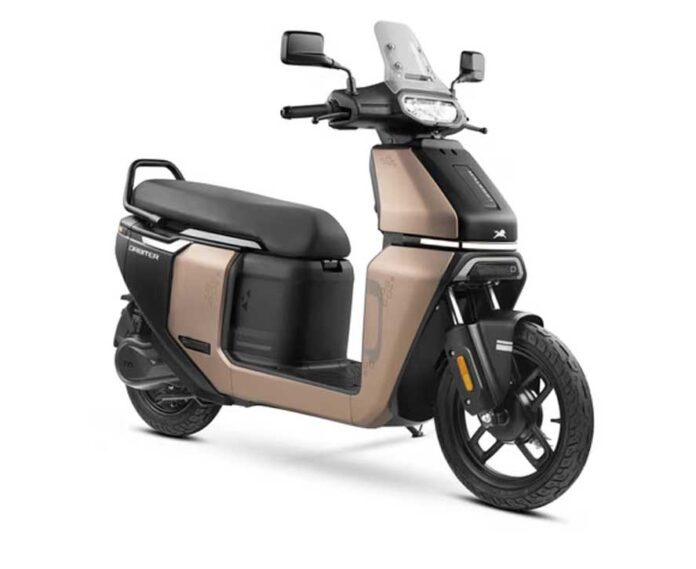
In terms of design, the scooter features an 845 mm flat-form seat intended to provide comfort for both the rider and pillion. A 290 mm straight-line footboard offers additional legroom, while the upright handlebar is designed to reduce fatigue during longer rides. Under-seat storage capacity is rated at 34 litres, large enough to accommodate two helmets. TVS describes the design as modern and functional, prioritising practicality while maintaining visual appeal.
The Orbiter V1 is equipped with several technology features, including a coloured LCD instrument cluster that displays incoming calls alongside standard ride data. Connectivity through a companion mobile application allows users to remotely track battery charge levels and odometer readings. Safety features include alerts for crashes, falls, theft, geo-fencing, and time-fencing. Additional functions such as Hill Hold Assist, Cruise Control, Parking Assist, and turn-by-turn navigation are also included. The scooter offers two riding modes — Eco and Power — both supported by regenerative braking to improve efficiency. Over-the-air software updates allow the vehicle to receive system improvements without requiring a service visit.
According to Gaurav Gupta, President of India 2W Business at TVS Motor Company, the launch represents an important step toward making electric mobility more accessible. He noted that separating the vehicle price from battery usage costs allows customers to better understand the long-term cost of EV ownership. Aniruddha Haldar, Senior Vice President heading the Commuter and EV Business, added that feedback from customers using the Orbiter V2 played a role in the decision to introduce a more affordable variant. He said models like BaaS could help accelerate EV adoption across a wider consumer base.
TVS Motor Company, operates in more than 80 countries and maintains manufacturing facilities in India and Indonesia. The company is the only two-wheeler manufacturer globally to have received the Deming Prize for quality. Its broader group portfolio includes Norton Motorcycles in the United Kingdom and TVS Ebike Company AG, which holds a notable position in Switzerland’s e-bike market.
The launch comes at a time when India’s electric two-wheeler segment is expanding rapidly, supported by government incentives, rising fuel prices, and increasing demand for low-emission urban mobility. Competitors such as Ola Electric, Ather Energy, and Chetak from Bajaj Auto have also been expanding their product line-ups and adjusting prices, intensifying competition particularly in the sub-₹1 lakh segment. TVS appears to be positioning the Orbiter V1 and its BaaS model to address affordability — one of the key barriers to broader EV adoption in the Indian market.