
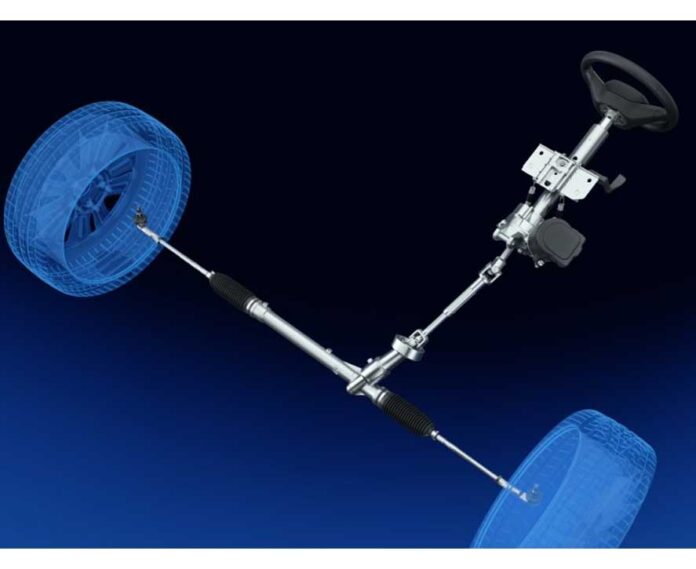
ZF has reached a major milestone in its electrification journey by producing 100 million electric power steering (EPS) systems worldwide, reinforcing its position as a global leader in steering technology.
The achievement highlights the remarkable evolution of electric power steering since ZF introduced the technology in 2001 as an alternative to conventional hydraulic steering systems. Over the past two decades, EPS has become a fundamental component of modern vehicle architectures, offering improved efficiency, enhanced driving dynamics, and seamless integration with advanced driver assistance systems (ADAS).
Today, ZF’s electric power steering systems combine large-scale manufacturing capabilities with advanced engineering expertise, supporting the automotive industry’s transition toward software-defined vehicles (SDVs). Beyond delivering precise steering performance, EPS now serves as a critical enabler of software-driven vehicle functions, allowing automakers to enhance vehicle performance, enable personalized driving experiences, and introduce new features through over-the-air software updates and continuous innovation.
“Producing 100 million electric power steering systems underscores ZF’s leadership in steering technology,” said Ramiro Gutierrez, Senior Vice President, Business Unit Steering. “Today, EPS is the industry standard for efficient, scalable, and software-enabled steering, serving as a foundational technology for software-defined vehicles, and next-generation steer-by-wire.”
From efficiency gain to key technology
Traditionally, hydraulic systems dominated the market. However, with increasing requirements for energy efficiency, emissions reduction and a shift toward software-defined vehicles the demand for electric power steering has become increasingly important. Unlike hydraulic systems, electric power steering only consumes energy when the steering is engaged. This reduces energy demand and supports more ambitious emission targets. “EPS systems provide several advantages that meet new requirements for the industry,” explains Gutierrez. “These include lower energy consumption, reduced CO₂ emissions and significantly improved integration capability for future software-defined functionalities.”
ZF’s EPS portfolio supports a broad range of vehicle applications, from compact passenger cars to high-performance SUVs and light commercial vehicles. Available in Column-Drive, Dual-Pinion, and Belt-Drive configurations, these systems can be flexibly tailored to meet diverse vehicle and performance requirements.
Foundation for software-defined vehicles
EPS is becoming a key enabler for the software-defined vehicle and forms the basis for steer-by-wire systems, in which the mechanical connection between the steering wheel and the wheels is eliminated. ZF is a pioneer in this field with global worldwide production of its steer-by-wire system already in progress.
The success of EPS technology is based on continuous innovation and close cooperation in ZF’s global production and development network with locations in Asia, Europe and North and South America.