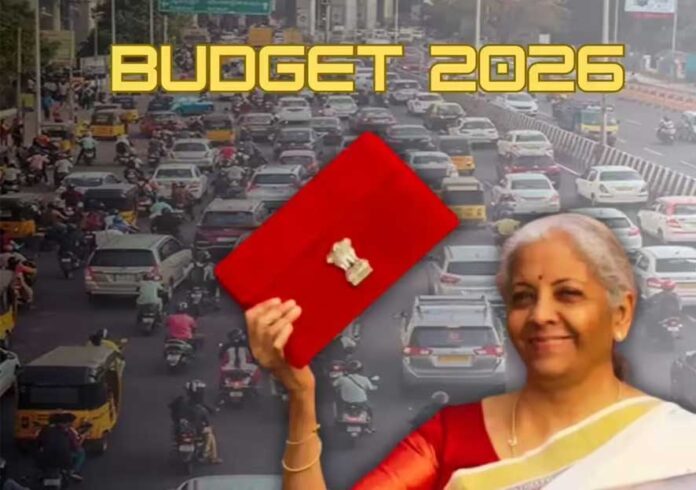
As expectations build ahead of the Union Budget 2026, industry leaders across mobility, energy, infrastructure, real estate and construction are calling for policy measures that go beyond short-term stimulus and focus on long-term structural transformation. From circular economy frameworks and intelligent energy operations to digital infrastructure management and sustainable urban development, stakeholders believe the upcoming Budget can play a defining role in strengthening India’s growth engine while advancing safety, efficiency and environmental goals.
Mr. Vikram Gulati, Executive Vice President – Corporate Affairs and Governance, Toyota Kirloskar Motor
“We extend our appreciation to the Government of India for its prudent fiscal and economic policies, which have ensured macroeconomic stability and sustained robust GDP growth despite global trade fragmentation and escalating geopolitical tensions. The rationalization of tax rates along with the GST reform have stimulated demand and reinforced market confidence, thereby contributing to high levels of growth in the automobile sector.
Looking ahead, we anticipate that the forthcoming Union Budget will foster the next phase of development by prioritizing impactful reforms aimed at enhancing the ease of doing business, deepening manufacturing localization, and advancing workforce skills in line with rapid technological advancements. Furthermore, we urge the Government to maintain its focus on infrastructure development and continue its sustained support for multiple green energy pathways to achieve India’s long-term goals of energy security and net-zero emissions
We remain confident that the upcoming Union Budget will continue to deliver balanced and forward-looking policy measures across industries, including the automobile sector, which is a vital contributor to economic growth and employment.”
Mr. Harinder Singh, Managing Director & CEO, Yokohama India Pvt. Ltd.
“As we approach the Union Budget 2026–27, the tyre industry requires policy continuity that reinforces manufacturing competitiveness and enables scale. While sustained infrastructure investment and the structural shift toward SUVs and premium vehicles have improved demand visibility, input cost stability remains the sector’s most pressing challenge.Natural rubber volatility continues to impact margins significantly. With India importing a substantial portion of its natural rubber requirements due to limited domestic availability, duty rationalization on critical raw materials would meaningfully improve cost efficiency and strengthen the global competitiveness of Indian tyre manufacturers.
The passenger vehicle segment is undergoing clear premiumization, with larger rim sizes and performance-oriented fitments increasingly dominating OEM specifications. Yokohama India has proactively aligned with this trend through localization of higher-inch tyres and capacity expansion at our Visakhapatnam facility, positioning us to serve both OEM and replacement demand across price segments.
For India to emerge as a global manufacturing hub for premium tyres, the Budget must deliver on three critical fronts: continued infrastructure capital expenditure to sustain automotive demand, enhanced export facilitation measures including duty drawbacks and logistics support, and stable trade policies on raw materials that provide cost predictability. These interventions would directly advance the Atmanirbhar Bharat vision while strengthening India’s position in global automotive supply chains.”
Mr. Anurag Mehrotra, Managing Director, JSW MG Motor India:
“From Budget 2026, we anticipate enablers for continued investment in infrastructure, as the logistic industry continues to contribute significantly to the GDP. On the electric mobility front, we expect the government to further strengthen consumer-led incentives and schemes to accelerate EV adoption. Rationalization of duties on EV components would be a welcome move, along with greater support for localization of EV manufacturing. While the charging network has expanded, there is still considerable progress to be made, and we would greatly appreciate strong fiscal support for the expansion of charging infrastructure.”
Mr. Ajinkya Firodia, Vice Chairman & Managing Director, Kinetic Watts & Volts Ltd, said that India’s electric mobility sector is witnessing strong momentum, driven by progressive government policies and the inherent value proposition of EVs, including lower operating and maintenance costs along with smart, connected technologies. He added that accelerating this transition is vital in addressing India’s environmental concerns and growing urban pollution.
Looking ahead to the Union Budget, he expressed optimism that flagship initiatives like the PM E-Drive policy will be continued and strengthened to further encourage EV adoption. He suggested complementary measures such as pollution-linked taxes on high-emission vehicles, enhanced scrappage incentives for older ICE vehicles, and a dedicated PLI framework for startups and mid-sized manufacturers to accelerate fleet renewal and strengthen domestic manufacturing.
Mr. Firodia also welcomed the ₹1 lakh crore RDI fund as a major boost for deep-tech research and innovation, aligning with the vision of Atmanirbhar Bharat by reducing dependence on imports and fostering next-generation technologies. He highlighted the need for targeted export support to help Indian manufacturers remain competitive amid global uncertainties, and stressed that sustained investment in education and skill development is essential to retain talent and position India as a global leader in innovation and manufacturing.
Mr Kartick Nagpal, President, Rosmerta Technologies Limited
“A Budget-led push for the circular economy in mobility can create a virtuous cycle for both the automotive sector and the broader economy. Supporting formal vehicle recycling and structured end-of-life frameworks will help phase out older and unsafe vehicles while stimulating replacement demand. This will improve road safety and reduce emissions.
To accelerate this transition, the Budget must focus on policy clarity, ease of compliance and financial viability across the recycling and vehicle fitness ecosystem. A coordinated emphasis on circularity, road safety and vehicle fitness can deliver sustainable growth, cleaner air, safer roads and meaningful employment generation.”
Mr Vaibhav Kaushik, Co-Founder & CEO, Nawgati
“As India looks to the future of mobility and energy through Union Budget 2026, the discussion must move beyond the number of chargers or stations being built to how efficiently existing infrastructure is operated. Whether EV charging networks or CNG stations, the core challenge today is coordination, not capacity.
Globally, energy systems that integrate physical infrastructure with real-time digital optimisation have delivered significant efficiency gains by reducing congestion, downtime and operational blind spots without adding new assets. Budgetary support for automation, interoperability and data-driven operations can ensure that every rupee invested in clean energy delivers maximum impact.”
Mr Rajan Luthra, CFO, ACE–Action Construction Equipment Ltd.
“This Union Budget comes at a crucial juncture as India navigates global trade headwinds and an uncertain external environment. With public capital expenditure of ₹11.21 lakh crore earmarked for FY2025–26, infrastructure continues to anchor economic momentum, GDP growth and employment.
For the construction equipment industry, demand recovery is expected to be driven by rising private capex, expanding export opportunities, defence applications and sustained investments in airports, railways and freight corridors. Policy support through GST rationalisation, easing interest rates and improved liquidity will be vital to crowd in private investment and strengthen industry confidence.”
Mr Mohit Jandu, Managing Director, J Infratech
“As the Union Budget 2026 approaches, infrastructure—particularly roads and highways—remains central to India’s growth agenda. Continued prioritisation of road development will be critical for mobility, freight movement, logistics efficiency and long-term climate objectives.
We expect a sharper focus on end-to-end digital transformation of the national highway ecosystem, from planning and DPRs to construction, maintenance and tolling. Leveraging digital mapping and validation tools can improve coordination, speed up approvals and reduce ecological impact.”
Mr Nagendra Nath Sinha, IAS (Retd.), Managing Director, Rodic Digital & Advisory
“India has built an extensive 6.5 million km road network through sustained public investment, yet maintenance across much of this network still relies on outdated practices. The adoption of a Digital Road Asset Management System (RAMS), integrated with performance-based maintenance contracts, can significantly improve service quality, optimise lifecycle costs, enhance road safety and extend asset life.
We expect the upcoming Budget to mandate Digital RAMS across all National Highways, create dedicated financial support mechanisms for states and recognise Digital RAMS with performance-based contracting as a notified reform. Equally important is operationalising India’s Net Zero 2070 commitment through green public procurement, enabling wider adoption of low-carbon materials through policy-backed demand.”
Mr Santosh Agarwal, CFO & Executive Director, Alpha Corp Development Limited
“Ahead of Budget 2026, the real estate sector is looking for measures that reinforce consumption-led growth, boost investor confidence and improve access to financing across residential and commercial segments. Initiatives that accelerate infrastructure development, streamline approvals and support timely project execution—especially in emerging urban markets—will be critical.
A strong emphasis on demand-side growth, alongside sustained investment in urban infrastructure, can help maintain market momentum and enable long-term, sustainable urban development across India.”