
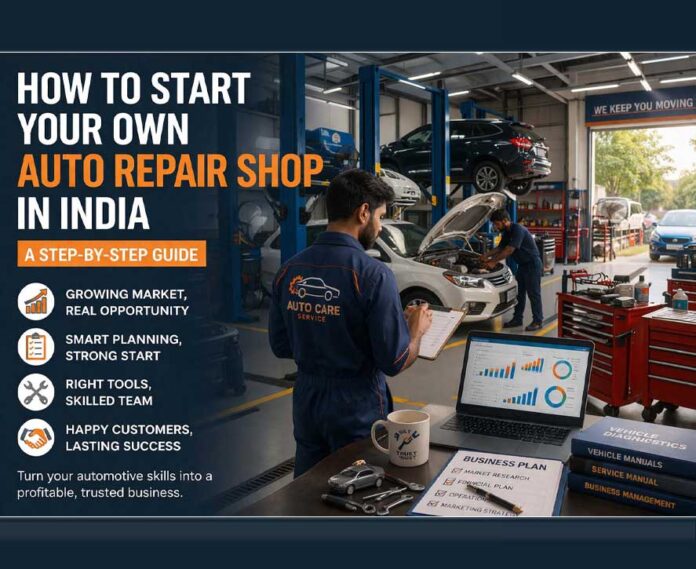
Starting an auto repair shop today is no longer just about technical expertise — it’s about building a structured, customer-focused business from day one. Across India, the vehicle maintenance market is expanding rapidly as vehicle ownership grows, automotive technology becomes more complex, and customers demand faster, more transparent, and reliable service. For skilled technicians, automotive enthusiasts, and local entrepreneurs, this shift presents a strong opportunity to turn workshop experience into a sustainable and profitable business.
However, the opportunity comes with real challenges. Rising fuel costs, supply chain delays, inconsistent parts quality, and infrastructure limitations can quickly impact margins and customer trust, especially in the early stages. In a fast-changing automotive landscape, workshops that rely only on technical skills may struggle, while those that approach operations with business discipline, structured workflows, and customer-focused strategies are more likely to succeed.
In this step-by-step guide, Elena Stewart explains how aspiring workshop owners can move from the idea of opening a garage to launching a professional, ready-to-operate auto repair shop. From identifying demand and selecting services to hiring technicians, setting pricing, and building repeat customers, this guide outlines the essential steps to help new workshop owners minimize risks, manage costs, and create a repair business that earns long-term customer trust.
Understanding the Business Engine of a Workshop
At the heart of a profitable garage is a simple idea: treat repairs like a repeatable business system. That means estimating local demand, choosing a location that matches the jobs you want, and running basic unit economics so every service has clear labour time, parts cost, and margin. Then you build the owner skills that keep the system steady: finance, operations, and customer follow-up, sometimes supported by a structured online degree in business.
This matters because growth in auto service is real, but profit is optional. A large global automotive service market size, USD 750.12 billion still won’t save a shop that prices blind or loses repeat customers. Imagine two workshops with the same tools. One tracks job cards, calls customers for preventive service, and uses customer relationship management as a central database to reduce missed follow-ups; the other relies on walk-ins and guesswork.
Turn Your Plan into a Ready-to-Open Workshop
This setup process helps you go from “I want to open a garage” to a workshop that can consistently book jobs, deliver quality work, and get repeat customers. For Indian automotive enthusiasts and professionals who follow new models, tech updates, and service trends, it turns that knowledge into a shop experience customers trust.
- Lock your service menu and tool list
Start with 5 to 10 high-demand services you can deliver reliably, such as periodic maintenance, brakes, clutch work, AC, batteries, and diagnostics. Then map each service to the minimum equipment needed: a lift or pit setup, air compressor, diagnostic scanner, torque tools, battery charger, tyre tools, and safety gear. This prevents overspending and ensures you can complete jobs end-to-end without delays. - Design a simple workflow that avoids rework
Create a clear flow: vehicle check-in, inspection, estimate approval, parts pick, repair, quality check, and delivery with a short road test where relevant. Use a job card for every vehicle and assign one person to own updates so customers do not get mixed messages. A tidy bay layout and a dedicated QC step reduce comebacks, which is where margins quietly disappear. - Hire for skill, then standardise the way they work
Recruit 1 lead mechanic and 1 to 2 technicians first, then add helpers once bookings become steady. In interviews, use a paid trial task like brake pad replacement or basic diagnostic troubleshooting to confirm real skill, not just years of experience. Write checklists for recurring jobs so quality stays consistent even when the team changes. - Set pricing that customers understand and you can defend
Build prices service-by-service using labour time, parts cost, consumables, and a clear margin target, then publish your most common rates on a simple rate card. Using fixed prices for specific services can reduce negotiation, speed up approvals, and keep your front desk confident. Review pricing monthly for your top services so rising parts costs do not surprise you. - Launch with trust signals and a repeat-visit engine
Start marketing 2 to 4 weeks before opening with a Google Business Profile, clear signage, photos of your bays, and a launch offer tied to a specific service, not a vague discount. Collect every customer’s phone number, vehicle details, and next-due service date, then follow up after delivery and again before the next interval. If you use shop software, insist on training and support so your team actually uses it instead of reverting to memory and paper.
Auto Repair Shop Startup Questions, Answered
Q: What permits and registrations do I usually need before taking my first job?
A: Start with basic business registration, local municipal trade permissions, and GST if you cross the threshold or plan B2B work. Add labour law compliance once you hire, plus proper waste handling for oil, filters, and batteries. Your safest move is to build a simple “compliance file” and get a local CA to review it before launch.
Q: How do I stay compliant without drowning in paperwork?
A: Turn compliance into weekly habits: store invoices, keep a service register, and log hazardous waste disposal. Assign one person to own documentation, even if it is you, and set a fixed admin hour each week.
Q: Can I finance equipment like lifts and scanners, or do I need full cash?
A: Many shop owners start with a mix of savings, equipment loans, and rentals for specialty tools. Get quotes from two lenders, compare total cost, and only finance tools tied to your most frequent services.
Q: How do I train staff for diagnostics and newer tech without losing months?
A: Hire one strong diagnostic lead, then standardise jobs with checklists and short skill tests. Use micro-training: 30 minutes daily on scan data, wiring basics, and common fault patterns.
Q: Should I worry about big service chains nearby?
A: Compete with focus, not size. Nearly organized multi-brand service chains hold a large share, so win on fast turnaround, transparent estimates, and consistent quality checks.
Final Week Readiness Checklist
Before you open the shutters: This checklist keeps your launch clean, compliant, and customer-ready, so you can focus on quality repairs and smart vehicle insights from day one.
✔ Confirm business registration, trade permission, and GST decision are completed
✔ Compile a compliance file with invoices, registers, and waste-disposal logs
✔ Finalise an equipment procurement list with delivery dates and installation slots
✔ Set tool calibration and scan-tool update routines before the first booking
✔ Complete staff recruitment steps with role checklists and a trial task
✔ Create a marketing launch plan with offers, signage, and Google Business setup
✔ Activate insurance and safety measures: fire, first-aid, PPE, and lift SOPs
Tick these off, then launch with calm confidence.
Launch Your Auto Repair Shop with Confidence and Credibility
Opening an auto repair shop is tough because the work isn’t just fixing cars, it’s earning trust while managing costs, people, and daily chaos. The way through is the mindset this guide pushes: entrepreneurial motivation backed by a business growth mindset, a customer satisfaction focus, steady community engagement, and long-term success planning from day one. When those stay non-negotiable, the shop begins to attract repeat customers, calmer operations, and predictable improvement instead of constant firefighting. Build trust in the first 90 days, and growth becomes a habit. Pick one simple 90-day goal this week, like faster updates to customers, and track it daily. That consistency builds resilience, reputation, and stability for years to come.