
Buying a new car or SUV is set to become more expensive from tomorrow, with several automakers confirming price increases effective January 2026. Manufacturers have attributed the revisions to rising input costs, including higher raw material prices and logistics expenses.
Luxury brands such as Mercedes-Benz, along with mass-market players like MG Motor, have announced price hikes across select models, impacting multiple segments of the passenger vehicle market. While only a few manufacturers have officially confirmed the increase so far, more carmakers are expected to follow suit in the coming days.
Here’s a look at the brands that have announced price hikes till now.
Mercedes-Benz India to hike prices by up to 2% from January 1, 2026
Mercedes-Benz India has announced a price increase of up to 2 per cent across its entire model range, effective January 1, 2026. The luxury carmaker attributed the revision to continued currency fluctuations, rising input costs, inflationary pressures, and higher transportation expenses.
The company added that it has taken measures to minimise the impact on customers, absorbing a portion of the exchange rate and cost pressures internally while passing on only part of the increased burden to buyers.
JSW MG Motor India announces 2% price hike across model range from January 1, 2026
JSW MG Motor India has announced a price increase of up to 2 per cent across its entire model range, effective January 1, 2026. The automaker said the revision is driven by rising input costs and broader macroeconomic pressures impacting manufacturing and supply chain operations.
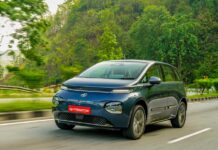
The hike is expected to affect several of MG’s high-demand models, including its best-selling electric vehicle, the Windsor EV, which could see a price increase of up to ₹35,000. Following the revision, the Windsor EV’s ex-showroom prices are likely to start at around ₹14.25 lakh.
MG’s entry-level electric offering, the Comet EV, is also expected to become more expensive by approximately ₹20,000, with revised ex-showroom prices projected to begin at about ₹7.7 lakh. The company is expected to announce the updated, model-wise and variant-wise prices early next month.
It remains unclear whether the recently launched Hector facelift will be included in the upcoming price revision.
Nissan Motor India to increase prices by up to 3% from January 1, 2026
Nissan Motor India has announced a price hike of up to 3 per cent across its model line-up, effective January 1, 2026. The revision comes as part of the company’s annual price adjustment and is also linked to rising input costs and exchange rate fluctuations.
Currently, Nissan retails only the Magnite subcompact SUV in India, priced between ₹5.62 lakh and ₹10.90 lakh (ex-showroom). Following the hike, prices for the Magnite are expected to rise to approximately ₹5.79 lakh–₹11.23 lakh (ex-showroom).
Looking ahead, Nissan is gearing up for a renewed push in the Indian market. The Japanese automaker plans to introduce three all-new products over the next 16 months as part of a product-led strategy aimed at rebuilding brand presence and expanding its footprint across key segments.
Renault India to hike prices by up to 2%; New-Gen Duster to debut on January 26, 2026
Renault India will increase prices across its model range by up to two per cent, citing rising production costs and prevailing macroeconomic conditions. The price revision will come into effect shortly, making Renault the latest automaker to announce a hike amid increasing cost pressures across the industry.
Alongside the price announcement, Renault India has confirmed that it will unveil the all-new, next-generation Duster on January 26, 2026. The upcoming model is expected to revive one of the most iconic nameplates in India’s SUV space. First introduced in 2012, the Duster played a pivotal role in shaping the compact SUV segment, which today accounts for nearly one-fourth of India’s passenger vehicle market.
Teaser images of the India-spec Duster reveal a distinctive LED daytime running light signature and full-width connected LED tail lamps—features not seen on the international Renault and Dacia Duster models, indicating India-exclusive design updates. Once launched, the new Duster will compete in the highly competitive mid-size SUV segment against rivals such as the Maruti Suzuki Grand Vitara, Hyundai Creta, Kia Seltos, Toyota Hyryder, MG Astor, Skoda Kushaq and Volkswagen Taigun.
Design-wise, the next-generation Duster marks a clean break from its predecessor and draws inspiration from the Bigster concept. At the front, it features a bold new fascia with Y-shaped LED DRLs, sleek LED headlamps, a muscular bonnet with pronounced creases, large air intakes, fog lamps, and a chrome-accented grille.
The side profile showcases squared-off wheel arches, roof rails, dual-tone alloy wheels, and prominent body cladding that enhances the SUV’s rugged appeal. At the rear, the Duster gets V-shaped LED tail lamps with a Y-shaped light signature, a rear skid plate, and an integrated roof spoiler, completing its robust and modern SUV stance.