
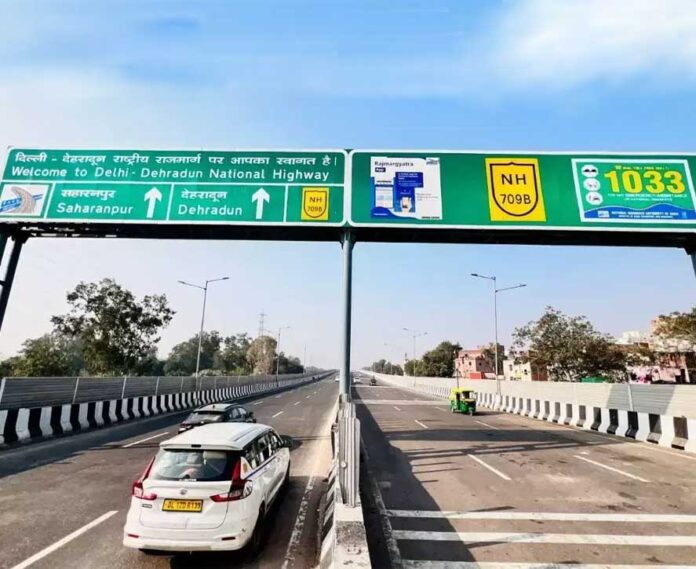
Prime Minister Narendra Modi inaugurated the Delhi–Dehradun Economic Corridor on April 14, highlighting its role in reducing freight costs and improving the movement of goods across northern India. Speaking at the event in Dehradun, the Prime Minister emphasized that the new corridor will make transportation faster, more efficient, and cost-effective.
The ₹12,000 crore infrastructure project is expected to significantly enhance logistics and supply chain efficiency across the Delhi–Western Uttar Pradesh–Uttarakhand region. By improving connectivity and reducing travel time, the corridor is likely to lower fuel consumption and freight charges, benefiting businesses, farmers, and transport operators alike.
The Delhi–Dehradun Economic Corridor passes through key locations including Ghaziabad, Baghpat, Baraut, Shamli, and Saharanpur. These areas are expected to see increased trade activity, improved warehousing infrastructure, and new industrial development opportunities as logistics efficiency improves.
According to the Prime Minister, enhanced road infrastructure will help goods reach markets faster, strengthening supply chains and improving distribution networks. The improved connectivity is also expected to benefit farmers and animal herders by enabling quicker transport of agricultural and livestock products, thereby reducing spoilage and improving market access.
The corridor is also anticipated to create new opportunities for logistics companies and transport operators by supporting the development of distribution hubs and warehousing facilities along the route. This, in turn, is expected to contribute to regional economic growth and generate employment opportunities across the transportation and logistics sectors.
Highlighting the broader impact, Modi stated that infrastructure development plays a vital role in economic expansion. He added that ongoing infrastructure initiatives in Uttarakhand are strengthening connectivity and enhancing logistics capabilities across the region.
The Prime Minister further emphasized that the Delhi–Dehradun Economic Corridor is more than just a road project. It is designed to act as a catalyst for trade growth, improved logistics efficiency, and job creation, supporting thousands of workers involved in construction, transport, and allied industries.
With improved connectivity, reduced travel time, and lower logistics costs, the Delhi–Dehradun Economic Corridor is expected to emerge as a key driver of economic development across northern India.