ICRA has projected a phase of moderated growth for the Indian automotive industry in FY2026-27, with wholesale volumes across major vehicle segments expected to expand by 3–6% year-on-year following a period of strong recovery in the latter half of FY2025-26.
According to the rating agency, the industry witnessed contrasting trends during the current fiscal year. While demand remained subdued in the first half, the second half recorded a sharp rebound supported by policy interventions, improved rural sentiment and a favourable financing environment. Structural shifts such as premiumisation and changing powertrain preferences are also reshaping consumer demand and technology adoption across segments.
Passenger Vehicles to Maintain Steady Momentum
Domestic passenger vehicle (PV) wholesale volumes are estimated to grow by 5–7% in FY2025-26, aided by improved affordability following GST rate cuts, strong replacement demand and sustained preference for personal mobility. Utility vehicles continue to outperform the broader segment, supported by multiple new launches and evolving consumer preferences.
However, growth is expected to moderate to 4–6% in FY2026-27 as inventory levels stabilise and the industry operates on a higher base. The share of alternative powertrains — including CNG, hybrid and electric vehicles — continues to rise, driven by regulatory push and increasing consumer acceptance.
Two-Wheelers Growth to Normalise
The domestic two-wheeler (2W) industry is projected to expand by 6–9% in FY2025-26, supported by healthy agricultural output, improved financing access and better affordability.
Growth is expected to ease to 3–5% in FY2026-27 as demand normalises. Premiumisation trends remain evident within the segment, with entry-level motorcycle demand facing affordability pressures due to higher vehicle prices, while premium motorcycles and scooters continue to witness stronger traction.
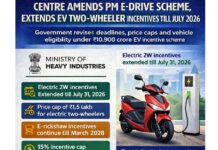
Electric two-wheeler penetration is expected to increase steadily, although supply-side challenges such as rare earth magnet availability remain a key monitorable factor.
Commercial Vehicle Demand Linked to Economic Activity
Wholesale volumes in the commercial vehicle (CV) segment are expected to grow by 7–9% in FY2025-26, driven by stronger demand for light commercial vehicles and buses.
ICRA estimates CV volumes will moderate to 4–6% growth in FY2026-27, supported by infrastructure activity, replacement demand and steady economic conditions. Medium and heavy commercial vehicles (M&HCVs) are expected to grow by 5–7%, while light commercial vehicles (LCVs) may expand by 3–5%.
Bus volumes are likely to outperform with projected growth of 7–9%, supported by replacement demand from State Road Transport Undertakings.
Regulatory interventions over the past decade, including stricter emission norms and safety mandates, have resulted in higher vehicle prices, which could continue to weigh on affordability, particularly in the truck segment.
Electrification to Remain a Key Structural Theme
Electric vehicle adoption across segments is expected to rise significantly by FY2030. Strong growth is anticipated in electric two-wheelers, three-wheelers and buses, while electric passenger cars and LCVs are projected to see gradual penetration growth from a relatively low base.
Continued policy support, improving charging infrastructure and declining total cost of ownership are expected to accelerate electrification momentum.
Commenting on the outlook, Srikumar Krishnamurthy, Senior Vice President and Co-Group Head – Corporate Ratings at ICRA, said the Indian automotive industry is currently navigating changing consumer preferences, technological evolution and sustainability priorities. While growth momentum is expected to continue into FY2026-27, expansion across segments is likely to remain moderate compared to recent highs. Over the medium term, vehicle electrification is expected to emerge as a defining structural trend for the sector.