A potential revamp of the Production Linked Incentive (PLI) scheme for automobiles in the upcoming Union Budget could significantly improve participation by electric vehicle (EV) manufacturers and accelerate green mobility adoption in India, according to Deloitte India.
Speaking during a pre-Budget interaction with PTI Videos, Sheena Sareen, Partner, Deloitte India, said EV sales momentum is expected to continue into 2026, supported by the concessional 5 per cent GST rate currently applicable to electric vehicles.
The PLI scheme for automobiles, introduced to promote advanced automotive technologies and zero-emission vehicles, has so far seen limited uptake. Sareen noted that out of more than 200 applicants, only five or six companies have qualified for incentives. A key challenge, she explained, is the requirement to achieve nearly 50 per cent domestic value addition, which remains difficult due to limited local production of critical components such as batteries and rare earth magnets.
Although the government has introduced certain relaxations, the eligibility criteria remain stringent. “Even after concessions, companies are struggling to meet the norms because key inputs are not available domestically,” Sareen said. Another major hurdle is the high investment threshold under the scheme.
For the four-wheeler segment, companies are required to invest a minimum of ₹2,000 crore over five years, with annual commitments. This requirement poses challenges for smaller manufacturers and startups, particularly amid uncertainties around scaling up manufacturing operations.
Sareen added that revamping and relaxing the PLI framework could allow more eligible applicants to benefit from the scheme, as seen in other sectors such as electronics and pharmaceuticals, where successive revisions have broadened coverage and eased conditions.
She further highlighted the importance of the Advanced Chemistry Cell (ACC) PLI scheme and the recently launched rare earth magnet PLI scheme in strengthening India’s EV supply chain. Another concern flagged was the inverted duty structure faced by EV manufacturers, where inputs and components attract higher GST rates than the finished vehicles.
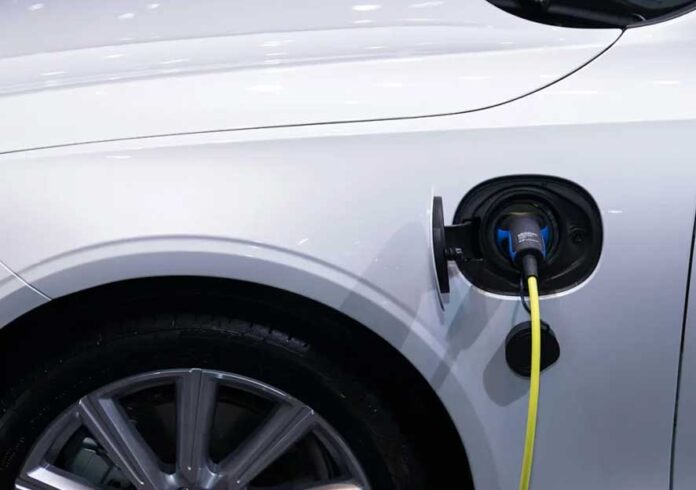
Currently, GST refunds are permitted only on inputs and components, excluding capital goods and input services. Extending refunds to these categories could help reduce costs and improve competitiveness. Sareen also pointed out that public EV charging services attract 18 per cent GST, and lowering this to 5 per cent, in line with EVs, would make charging more affordable and encourage wider EV adoption.