
WeRide has announced an expanded strategic partnership with Tencent Cloud, the cloud computing brand under Tencent. Under the collaboration, users in Guangzhou can now book WeRide Robotaxi rides through the Tencent Mobility Service available on WeChat.
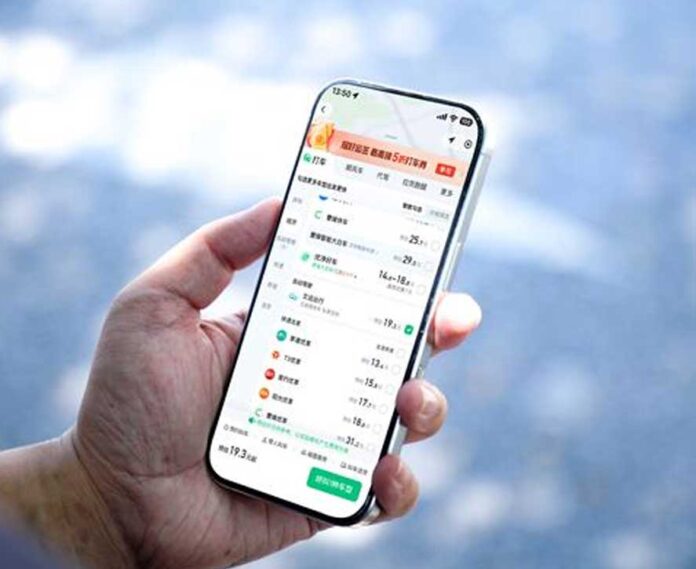
As part of the integration, WeRide’s robotaxis will be accessible through the Tencent Mobility Service mini program on WeChat, enabling users to book and pay for autonomous rides directly within the platform without downloading any additional applications.
The partnership deepens the connection between China’s large-scale mobility ecosystem and WeRide’s autonomous driving technology. By integrating robotaxi services into WeChat’s widely used mobility platform, the companies aim to expand access to safe and reliable driverless transportation for a broader base of users across the country.
By tapping into the high-traffic Tencent Mobility Service mini program, WeRide’s Robotaxis can reach a broad base of WeChat users and integrate more closely with daily public travel scenarios. As reach and ride frequency grow, WeChat’s ecosystem traffic is expected to translate into steady demand, accelerating WeRide’s large-scale Robotaxi commercialization and progress toward per-vehicle profitability.
Following the launch of the Tencent Mobility Service mini program, WeRide’s Robotaxi service will also soon be available on Tencent Maps, further expanding the public’s autonomous ride-hailing options.
Currently, Guangzhou users are the first to experience the service on WeChat, with plans to gradually expand availability to additional cities. To book a ride, users can simply open WeChat, tap “Me” → “Services” → “Tencent Mobility Service”, enter their pickup and drop-off points, and select “Autonomous Driving – WeRide” when a nearby Robotaxi stop is available.
As early as April 2024, WeRide and Tencent Cloud established a strategic partnership focusing on areas such as autonomous driving cloud computing platforms. In May 2025, both companies signed a new agreement to deepen collaboration, jointly promoting the large-scale commercial operations of Level 4 Robotaxi services. The launch of WeRide’s Robotaxi on Tencent Mobility Service is a testament to the results of their long-term collaboration and marks a new starting point toward their next milestone together.
WeRide upholds a safety-first, user-centric approach, integrating urban operations with a localized service network. In China, WeRide’s Robotaxi service has already launched fully driverless commercial operations in Guangzhou and Beijing. To meet diverse mobility needs, the company has introduced the standalone “WeRide Go” app and the “WeRide Go” WeChat mini-program, continuously enhancing its service access points and expanding its mobility network.
Globally, WeRide is integrating into top mobility platforms at an industry-leading pace. Its Robotaxi fleet is now integrated with Uber, Southeast Asia’s leading superapp Grab, the Middle East’s TXAI platform, and will be available on the IOKI app in Zurich soon.
The company has also launched fully driverless Robotaxi commercial operations in Abu Dhabi, and is conducting public operations, trial services, or autonomous testing in Dubai, Riyadh, Singapore, and Zurich. Fully driverless commercial operations in Dubai are set to launch in the near future.
Supported by a mature ecosystem and efficient operations, WeRide’s global Robotaxi fleet exceeded 1,023 vehicles in January 2026, moving steadily toward its goal of over 2,600 Robotaxis globally in 2026 and tens of thousands by 2030.
Looking ahead, WeRide will continue to deepen cooperation with partners including Tencent Cloud, jointly accelerate the large-scale commercialization of autonomous driving globally, and bring convenient, safe, and reliable driverless ride-hailing services to more users.