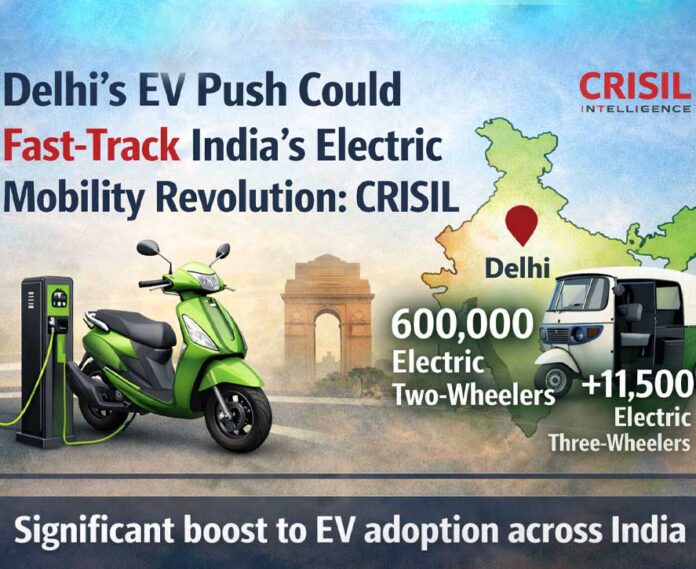
Delhi’s proposed ban on new petrol-powered two-wheelers and three-wheelers is expected to significantly accelerate electric vehicle adoption across India, according to a new analysis by CRISIL Intelligence. The research firm estimates that the move could add nearly 600,000 electric two-wheelers and about 11,500 electric three-wheelers to national sales, despite Delhi accounting for a relatively small share of the overall vehicle market.
In its impact note, CRISIL highlighted that the draft Delhi EV Policy 2026–2030 proposes banning new internal combustion engine (ICE) three-wheelers from January 2027 and two-wheelers from April 2028. If implemented, the policy could push India’s electric two-wheeler penetration to 21–23% by fiscal 2029, compared with an estimated 18–20% without the policy. Similarly, electric three-wheeler penetration could increase to 40–42%, up from 38–40% under current projections.
CRISIL noted that the lifetime cost of ownership for electric two-wheelers and three-wheelers is already competitive with petrol-powered alternatives. The proposed incentives under the Delhi EV policy are expected to further strengthen the economic case for electric vehicles, encouraging faster adoption among consumers and fleet operators.
However, the report also pointed out certain challenges. School bus operators, for instance, are currently not eligible for subsidies available to state transport undertakings. CRISIL suggested that targeted policy support may be required for this segment to ensure a smooth transition.
The research firm emphasized that Delhi’s move could have broader national implications. With 66 of the world’s 100 most polluted cities located in India, similar policy mandates from larger states could significantly accelerate the country’s shift toward electric mobility. This, in turn, may push automakers to increase investments in electrification and accelerate localisation of batteries, components, and charging infrastructure.
The proposed policy follows Delhi’s ranking as the world’s most polluted capital city in the IQAir 2025 World Air Quality Report. Vehicular emissions contribute around 23% of winter pollution in the city, with two-wheelers accounting for nearly 67% of Delhi’s registered vehicle population.
Beyond restrictions on new registrations, the draft policy also proposes fully electric bus fleets for the Delhi Transport Corporation and the Transport Department, along with a target to electrify 30% of school buses by 2030. The policy also outlines financial incentives and tax benefits to support buyers and operators during the transition.
The draft Delhi EV Policy 2026–2030 is currently open for public feedback until May 10, after which it is expected to be formally notified.