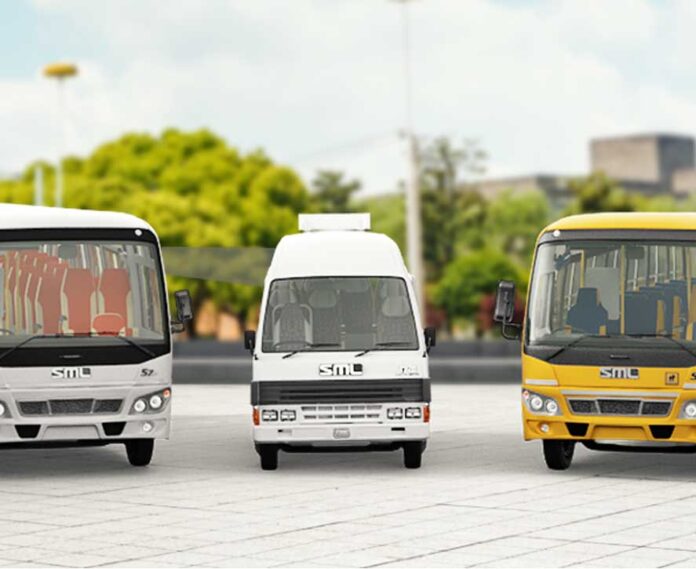
SML Mahindra Ltd is planning to launch its first electric bus in FY27, marking its entry into the electric commercial vehicle segment, even as the company maintains a cautious outlook on the pace of industry-wide adoption and the commercial viability of green mobility investments.
“Our electric bus is currently under development, and we plan to launch it within this financial year,” said Vinod Sahay, Chairman – SML Mahindra & Mahindra Advanced Technologies and President – Aerospace, Trucks & Buses, during an earnings call on Monday.
The upcoming launch will position SML Mahindra in a segment that remains relatively small but strategically important, as commercial vehicle manufacturers prepare for the transition to cleaner mobility solutions. However, the company emphasized that it will remain disciplined in capital deployment following the rollout. “Post-launch, we will evaluate every opportunity based on its commercial viability and returns,” Sahay added.
Sahay also highlighted that the transition to greener commercial vehicles will not rely solely on battery-electric technology, particularly in heavier vehicle segments. “Electric is not necessarily the only green technology for the CV industry. For heavy trucks, hydrogen and fuel-cell technologies will also play a significant role,” he noted.
According to Sahay, electric powertrains are expected to gain stronger traction in city buses and smaller commercial vehicles, while heavy trucks may gradually shift toward hydrogen fuel-cell solutions. At present, however, adoption of electric buses remains limited, especially outside government-led procurement programs.
“What we are seeing currently, apart from state transport undertaking purchases, is limited adoption by private sector operators, including employee and school transport providers,” Sahay said.
He further pointed out that the electric bus segment continues to face several challenges, including high upfront costs, longer payback periods, and gaps in charging infrastructure. “There are multiple challenges related to cost, payback period, and charging infrastructure. Currently, electric buses account for less than one per cent of the segment,” he added.
Despite these challenges, SML Mahindra remains confident about its technological readiness. Sahay noted that the broader Mahindra Group’s expertise in electric vehicles provides a strong foundation for the company’s electric bus development. “We are mastering the technology. Mahindra has strong EV capabilities, and we are well-positioned to move quickly as the market evolves,” he said.
However, the company indicated that any large-scale investment in electric mobility will depend on clearer demand visibility. “When to allocate more capital for product expansion will be a cautious decision based on market evolution,” Sahay stated.
This measured approach reflects SML Mahindra’s current focus on expanding its presence in the conventional commercial vehicle market, where it sees significant growth opportunities. At the same time, the company is developing powertrain capabilities to ensure readiness when electric bus adoption gains momentum.
“There are several areas we are working on, including powertrain development, so that when the industry reaches scale, we are ready to step up quickly,” Sahay concluded.