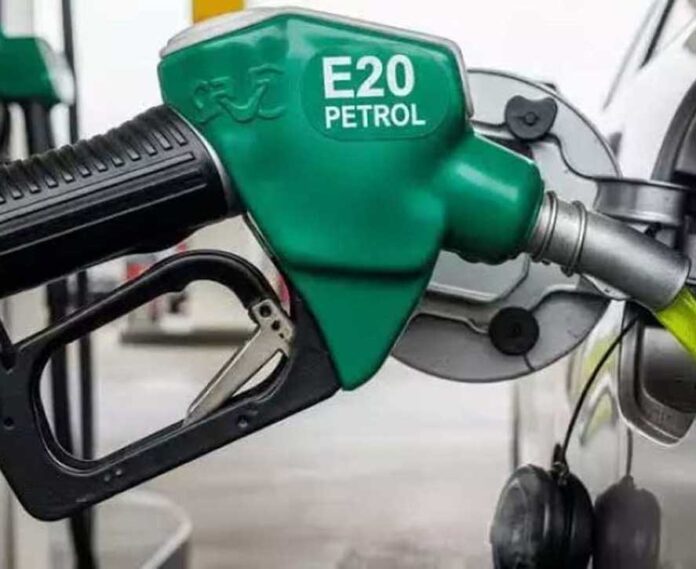
Oil Marketing Companies (OMCs) have conducted additional nationwide testing of EBMS (E20 petrol) following recent media reports alleging the presence of moisture and elevated chloride levels in the fuel.
The intensive testing covered the entire EBMS supply chain, with OMCs examining fuel samples for moisture and chloride contamination. According to the findings, fuel quality remains consistently within the prescribed limits, with the tests providing no evidence to validate claims of chloride levels reaching 500 ppm or the presence of excessive moisture.
The OMCs said the extensive testing was scientifically designed to assess the reported concerns and reaffirmed that there is no validated evidence of widespread fuel contamination or an immediate cause for alarm.
Reiterating their focus on fuel quality, the companies said fuel standards remain a top priority and that any issue with the potential to affect vehicle performance or consumer confidence is addressed promptly through scientific investigation and appropriate corrective measures.
The latest testing is intended to reassure consumers that E20 petrol supplied through the OMC network continues to meet the applicable fuel-quality requirements.
Government of India has prescribed a stringent chloride specification for ethanol used in petrol blending and has instituted a high-frequency monitoring mechanism to ensure compliance across the entire supply chain. Chloride monitoring is being done at multiple point of supply chain including refineries, distilleries, depots/terminals and retail outlets nationwide, confirming that quality is being consistently maintained throughout the supply chain.
In addition to the already established quality assurance protocols, Oil Marketing Companies have further strengthened surveillance by conducting water-ingress and density tests 8–12 times daily at every retail outlet. Mobile fuel quality testing laboratories have also been deployed across locations, while test results are being independently validated through fuel laboratories to ensure the highest standards of quality assurance.
These multipronged stepped-up testing protocols across the supply chain has validated our highest fuel quality standards.
MS from Refinery: Actual Chloride levels in Petrol is well within 1 ppm
Over 100 additional randomly selected petrol samples tested across various refineries confirm that chloride content remains consistently low, with all samples reported at or below the 1 ppm. This reflects the continued effectiveness of quality checks built into India’s robust refining and dispatch process.
Pure Ethanol ex distillery:
Ethanol supplied by distilleries—the principal blending component—has also consistently recorded chloride levels significantly below the prescribed specification, reflecting robust quality control mechanisms at the production stage.
A dedicated task force having members of OMCs & CHT has checked ethanol samples from 80 distilleries across the country in last 10 days and all samples had Chloride content less than 3 ppm.
Ethanol Blended MS (E20) distributed via OMCs’ Marketing Infrastructure:
Depots / Tank Trucks: Ethanol and E20 samples tested at depots and terminals continue to meet prescribed chloride limits, with regular monitoring at this stage ensuring that quality is maintained as fuel moves through the storage and distribution network. More than 80 samples across the nation collected from various OMC terminals showed chloride content below 3 ppm.
Retail Outlets (RO): Under the intensified monitoring programme, more than 160 samples have been analysed for chloride content in last few days and levels are in range of 0-3 ppm contrary to the claims of several hundred ppm. The surveillance system identified only two isolated instances where elevated chloride levels were detected. These were suspended immediately, followed by detailed root-cause analysis and implementation of appropriate corrective measures before restoration of supplies.
Water ingress testing:
About 90,000 ROs have commenced mandatory inspection and monitoring of underground storage tanks. The underground tanks at ROs are being inspected 8–12 times every day and have not revealed any water ingress so far.
Tabulated summary of the above tests are available on the official website of CHT at www.cht.gov.in. This would be updated as and when more test results are available.
Oil Marketing Companies wish to reassure consumers that fuel quality remains their highest priority. Quality surveillance is undertaken continuously across the supply chain, and wherever any deviation is detected, prompt and decisive corrective action is initiated.
With the above, Consumers should continue to use E20 petrol with confidence, as the fuel supplied through the OMC network conforms to the prescribed quality specifications and is backed by robust quality assurance and monitoring systems designed to safeguard consumer interests at every stage of the supply chain.