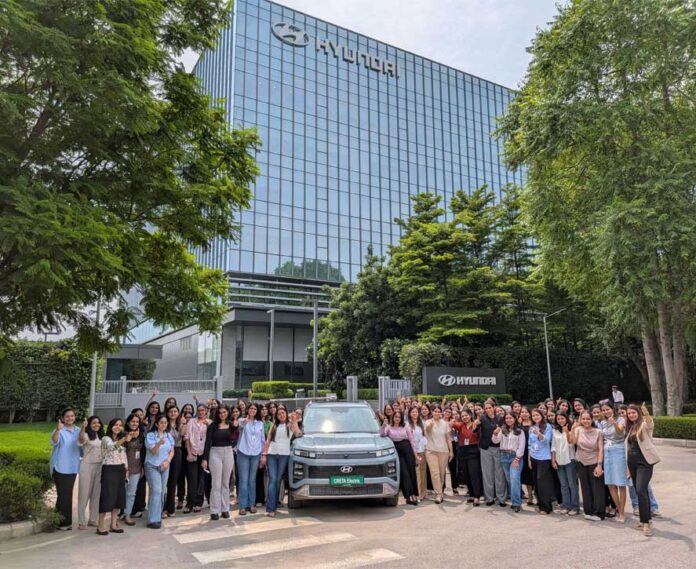
Hyundai Motor India Limited (HMIL) has set a target to increase women’s representation in its executive workforce to 20% by 2030, reinforcing the company’s focus on building a more diverse and future-ready talent pipeline.
The target marks a significant step in HMIL’s efforts to strengthen workplace diversity and create a more inclusive workforce across its executive ranks.
Women currently account for more than 8% of HMIL’s total executive workforce, which comprises over 4,000 employees. The company’s latest recruitment trends also indicate a growing participation of women in its early-career talent pool.
Around 45% of the Management Trainees and Engineer Trainees recruited by HMIL in 2026 are women, highlighting the changing composition of talent entering the automotive industry.
The increased representation of women among young recruits is expected to support HMIL’s long-term objective of developing a diverse leadership pipeline and strengthening its workforce for the future. With its 2030 target, Hyundai Motor India is seeking to build on the progress made in recent years and further integrate diversity and inclusion into its talent and workforce strategy.
The target reflects HMIL’s belief that inclusive workplaces strengthen innovation, collaboration and long-term business growth. HMIL is witnessing increased participation of women across manufacturing, engineering, R&D, sales, service, corporate functions and leadership roles, bringing diverse perspectives and expertise that enrich the organization and contribute to innovation, collaboration and long-term business growth.
Commenting on the announcement, Mr. Tarun Garg, MD & CEO – HMIL, said: “At Hyundai Motor India Limited, we believe that bringing together people with diverse experiences, perspectives and capabilities helps create stronger teams, drive innovation and build a more resilient organization. Our commitment to achieving 20% women representation in executive workforce by 2030 reflects our focus on expanding opportunities, strengthening our talent pipeline and creating an environment where every individual can realize their full potential. As the talent landscape continues to evolve, we are encouraged by the increasing participation of talented women professionals across industries and look forward to enabling their growth across all areas of our business.”
How is HMIL building a more inclusive talent pipeline?
As part of the long-term workforce strategy, HMIL has implemented a comprehensive Diversity, Equity and Inclusion (DEI) framework designed to attract, develop and retain talent while supporting career progression and leadership development. Key pillars of HMIL’s DEI agenda include:
Structured Diversity Hiring
- Gender-balanced recruitment practices across functions
- Expanded campus outreach and engagement initiatives
- Competency-based talent assessment processes
- Focus on strengthening leadership representation
Career Advancement and Growth
- Transparent performance evaluation and career progression frameworks
- Women recorded a 23% promotion / elevation rate in FY26
- Increased access to learning, development and leadership opportunities
Women @ Work 2.0
- Comprehensive maternity and parental support
- Childcare assistance and workplace flexibility
- Performance continuity safeguards
- Employee engagement and reintegration programs
TrailblazHER Leadership Initiative
- Focused leadership development for high-potential women professionals
- Capability building, mentorship and career acceleration support
- Future leadership readiness programs
Inclusive Workplace Infrastructure
- Crèche facilities at manufacturing plants
- Dedicated wellness and relaxation rooms
- Enhanced safety, mobility and support measures
Health & Wellness
- Preventive health and wellness programs
- Women’s health awareness initiatives
- Cancer screening, stress management and healthcare support services
These initiatives align with HMIL’s broader ESG agenda and contribute to the objectives of United Nations Sustainable Development Goal (SDG) 5: Gender Equality and SDG 8: Decent Work and Economic Growth, reinforcing the Company’s commitment to creating equitable opportunities and enabling sustainable workforce participation.
What role does workforce diversity play in shaping the future of automotive industry?
As India’s automotive and mobility sectors continue to transform through advanced manufacturing, digitalization and evolving customer expectations, workforce diversity is becoming an increasingly important contributor to innovation, problem-solving and organizational resilience. HMIL believes that attracting talent from a broad spectrum of backgrounds enhances competitiveness and supports sustainable business growth.