Hero MotoCorp and the International Road Federation – India Chapter (IRF-IC) have strengthened their efforts to improve road safety for children through eight Safe School Zone interventions across Delhi and Jaipur. Supported by Hero MotoCorp under its Corporate Social Responsibility (CSR) initiative, Ride Safe India, the programme aims to make school commutes safer through road engineering measures, safety awareness and community participation.
The interventions cover four schools in Delhi and four school zones in Jaipur. The inauguration ceremonies brought together representatives from Hero MotoCorp, IRF-IC, educational institutions and relevant civic and traffic authorities.
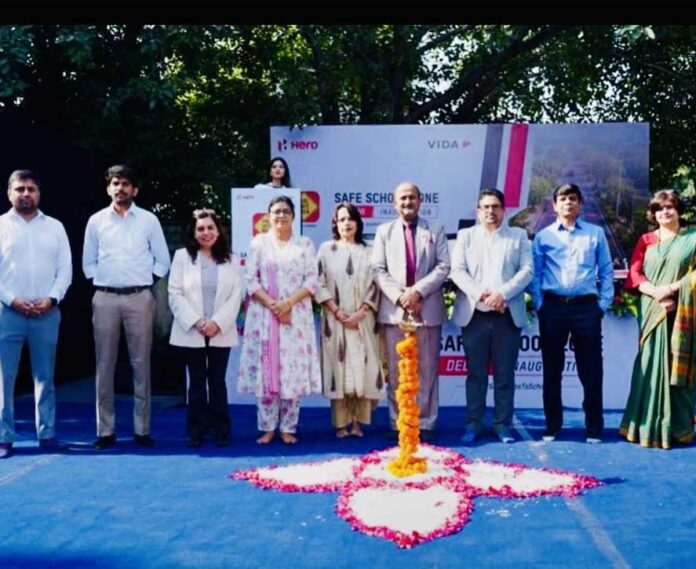
In Delhi, the inauguration took place at Government Co-Education Senior Secondary School in Sector 22, Dwarka. The event was attended by representatives from Hero MotoCorp, IRF-IC, the school and local civic and traffic authorities.
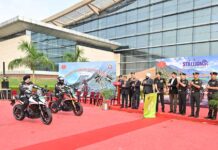
In Jaipur, the interventions were inaugurated at PM Shri Kendriya Vidyalaya No. 3 in Jhalana. The programme was attended by K. K. Kapila, Founder President of IRF-IC, along with members of the IRF-IC team, SIAM, Delhi Police and Hero MotoCorp representatives.
Eight School Zones Covered Across Delhi and Jaipur
In Delhi, the initiative covers four institutions: Government Co-Education Senior Secondary School in Sector 22, Dwarka; Prudence School in Sector 22, Dwarka; M. L. Khanna DAV Public School in Sector 6, Dwarka; and Mount Carmel School in Anand Niketan.
In Jaipur, four school zones have been identified, with the main inauguration held at PM Shri Kendriya Vidyalaya No. 3 in Jhalana.
As part of the programme, IRF-IC conducted site assessments to identify road safety risks around the selected schools. Based on these assessments, the initiative introduced low-cost, targeted infrastructure improvements designed to reduce vehicle speeds and improve pedestrian visibility near school premises.
The interventions include school-zone warning signs, freshly painted road markings, enhanced pedestrian visibility and physical traffic-calming measures intended to encourage motorists to slow down near school entrances and surrounding roads.
Student Participation and Road Safety Awareness
Alongside infrastructure improvements, the programme incorporates activities to build road safety awareness among students and local communities.
In Jaipur, students participated in road safety drawing activities and nukkad nataks (street plays) highlighting pedestrian safety and responsible road behaviour. These activities aim to encourage children to adopt safer practices and share road safety messages with their families and communities.
Commenting on the initiative, K. K. Kapila, President Emeritus of the International Road Federation (IRF), highlighted the importance of combining physical road infrastructure with community engagement and student participation to promote safer school environments.
The programme brings together industry stakeholders, civil society organisations, educational institutions and civic authorities to support the development of safer, child-friendly road infrastructure.
Industry and Civic Stakeholders Support the Initiative
The Delhi inauguration featured participation from P. K. Banerjee, Former Executive Director of SIAM and Advisor to IRF-IC; Nihal Kaul, Plant Head at Hero MotoCorp; Ravi Kumar Meena, Assistant Engineer at the Delhi Development Authority (DDA); and Murari Meena, Traffic Inspector for Sectors 22 and 23 in Dwarka. Members of the IRF-IC leadership and team were also present.
The Safe School Zone interventions are intended to improve road-user awareness, encourage responsible driving and reduce risks associated with vehicle movement around educational institutions. By combining engineering measures with awareness-building activities, Hero MotoCorp and IRF-IC aim to create safer environments for children travelling to and from school.
The initiative forms part of Hero MotoCorp’s Ride Safe India campaign, supported through its CSR efforts, and reflects a collaborative approach to improving road safety for vulnerable road users.