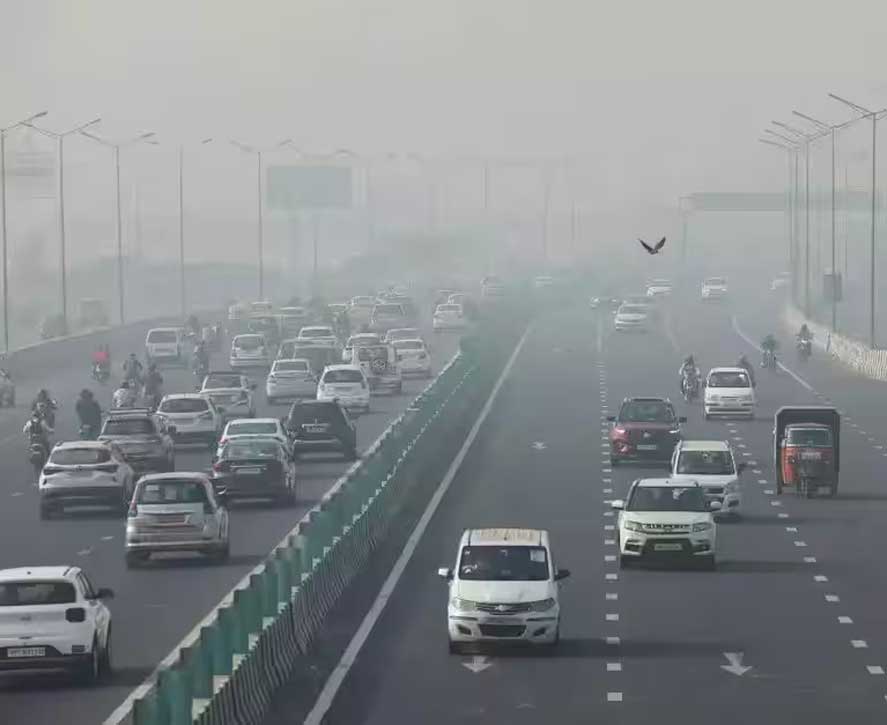
An expert committee constituted by the Commission for Air Quality Management (CAQM) has proposed a phased transition away from internal combustion engine (ICE) vehicles across Delhi-NCR, including the immediate phase-out of BS-I, BS-II and BS-III vehicles and a target of 100% zero-tailpipe-emission (ZTE) vehicle sales for private four-wheelers by 2030.
The committee has recommended that BS-IV vehicles be phased out by 2030, BS-VI two-wheelers by 2035 and BS-VI four-wheelers by 2040. It has also proposed that the registration of new ICE private four-wheelers be prohibited from January 1, 2031.
The interim report outlines a series of measures to reduce vehicular emissions, including stricter seasonal restrictions, accelerated adoption of zero-emission vehicles, government fleet electrification and incentives for vehicle scrappage. The recommendations are proposals and are subject to consideration by the CAQM.
Phased Restrictions on Existing Vehicles
The committee has recommended additional restrictions on vehicle use during the high-pollution period from November 1 to January 31. It has proposed restricting or banning BS-IV vehicles across Delhi-NCR from the upcoming winter season, initially through a pilot programme before expanding the measures across the region the following year.
From 2035, restrictions on BS-VI vehicles could also be considered if the average Air Quality Index (AQI) exceeds 200.
The proposed phase-out timelines for existing ICE vehicles are broadly aligned with those outlined in the Delhi EV Policy 2026. The recommendations are intended to accelerate the transition towards cleaner mobility while addressing emissions from older, more polluting vehicles.
Committee Report Highlights Older Vehicles’ Contribution to Emissions
The CAQM constituted a 15-member expert committee in December 2025 to develop a multi-pronged roadmap for reducing emissions from the vehicular sector. The committee submitted its interim report on August 18, which was shared on Wednesday, according to the supplied report.
An official said the CAQM had previously issued directions on phasing out light goods vehicles and three-wheelers based on the committee’s recommendations, adding that the wider report was under consideration.
According to the report, Delhi-NCR had an active fleet of approximately 2.2 crore vehicles with valid fitness approval. Electric vehicles accounted for around 3.6 lakh vehicles, or just 1.6% of the total.
The report cited emission factors made available by the Automotive Research Association of India (ARAI) to highlight the disproportionate contribution of older vehicles to particulate matter (PM) emissions. BS-I to BS-III vehicles account for around 30% of the fleet but contribute nearly 74% of PM emissions. BS-IV vehicles contribute a further 19%.
In comparison, BS-VI vehicles make up more than 41% of the fleet but account for approximately 7% of PM emissions, according to the report.
100% ZTE Sales Target for Private Four-Wheelers by 2030
To accelerate the adoption of cleaner vehicles, the committee has proposed a phased zero-tailpipe-emission vehicle sales mandate for every original equipment manufacturer (OEM) selling private four-wheelers in Delhi-NCR.
Under the proposal, ZTE vehicles would need to account for the following shares of each OEM’s new private four-wheeler sales:
- 2027: 20%
- 2028: 45%
- 2029: 70%
- 2030: 100%
The committee has described the proposed transition as technology-neutral. While battery electric vehicles are currently the principal available ZTE option, the framework could also accommodate other technologies, such as hydrogen fuel-cell vehicles, if they become commercially viable.
The proposed sales targets would represent a significant shift in the region’s new-vehicle market, placing increasing pressure on automakers to expand their zero-emission offerings and supporting infrastructure.
Government Fleets and Commercial Equipment to Transition to ZTE
The committee has also recommended accelerating the transition to zero-tailpipe-emission vehicles across government fleets and other vehicle categories.
Under its proposals, all central, state and city government offices, along with public-sector organisations, should procure, hire or contract only ZTE vehicles from April 1, 2027, wherever technically feasible.
The report has proposed the following timelines for other categories:
- April 1, 2028: Construction vehicles and equipment should transition to ZTE alternatives.
- April 1, 2030: Municipal service vehicles should transition to ZTE vehicles.
- April 1, 2030: Earth-moving, material-handling and mining equipment should transition to ZTE alternatives.
- By April 1, 2030: Tractors and agricultural machinery should transition in accordance with the recommendations of the Agriculture and Stubble Burning Committee, with the transition taking place no later than the specified date.
The proposals would extend the transition beyond private passenger vehicles to government operations, municipal services and equipment used in construction and other industrial activities.
Proposal for Right-to-Charge Laws Across Delhi-NCR
To address charging access, the committee has recommended enacting right-to-charge laws across Delhi-NCR. The proposed legislation would establish a statutory right for EV owners to install AC chargers rated at 3 kW, 7 kW or 11 kW at their allocated parking spaces, subject to applicable safety standards.
The proposed right would apply equally to homeowners and tenants, potentially making home charging more accessible to residents who face restrictions on installing private charging points.
Expanding access to charging infrastructure would be an important part of supporting the proposed shift towards zero-emission mobility, particularly as the share of electric vehicles in new sales increases.
Additional Scrappage Incentives for Older Vehicles
The committee has proposed additional scrappage incentives for owners of BS-IV and BS-I, BS-II and BS-III vehicles who purchase a ZTE replacement within six months of scrapping their existing vehicle.
Under the recommendation, incentives for scrapping BS-IV vehicles could remain available for three years, while incentives for BS-I, BS-II and BS-III vehicles could be offered for one year.
The proposed incentives are intended to encourage owners of older, higher-emitting vehicles to replace them with cleaner alternatives, complementing the recommended phase-out timelines.
Preventing the Transfer of High-Emitting Vehicles to Other Regions
The report has also highlighted the need for coordinated action beyond Delhi-NCR, noting that air pollution extends across the Indo-Gangetic Plain and cannot be addressed solely through measures in individual cities.
It has suggested that similar principles could be considered across the region to prevent vehicles phased out in Delhi-NCR from being transferred to other highly polluted areas.
The committee has called for mechanisms to prevent the relocation of high-emitting vehicles to other cities in the Indo-Gangetic Plain, underlining the importance of a broader regional approach to vehicular pollution.
If implemented, the recommendations would combine restrictions on older ICE vehicles with targets for zero-emission vehicle sales, government fleet transitions, charging-access provisions and scrappage incentives. The proposals now form part of the measures being considered by the CAQM to curb vehicular emissions and improve air quality across Delhi-NCR.