
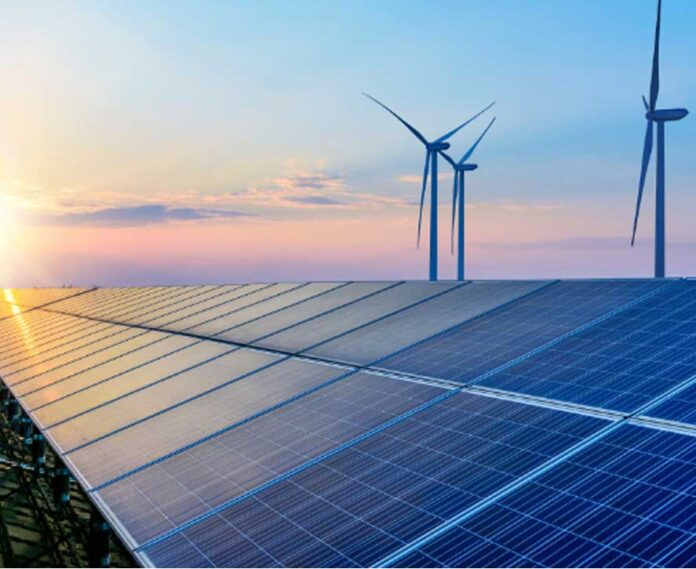
India’s commercial and industrial (C&I) renewable energy sector is poised for significant expansion, with installed renewable energy capacity projected to increase from 32 GW in 2025 to as much as 100 GW by 2032, according to a new report by the India Energy Storage Alliance (IESA) and Customized Energy Solutions (CES).
The report, which will be officially released during India Energy Storage Week (IESW) 2026, also forecasts a sharp rise in energy storage system (ESS) deployments across the C&I segment. ESS capacity is expected to grow more than tenfold over the next seven years, reaching up to 31 GWh by 2032, driven by accelerating renewable energy adoption, supportive policy reforms and increasing demand for reliable, cost-effective power solutions.
The findings highlight the growing role of state-level policy initiatives, corporate decarbonisation goals and advancements in energy storage technologies in driving the next phase of India’s clean energy transition across the commercial and industrial sectors.
India Energy Storage Week (IESW) 2026, to be held from July 8-10 at Yashobhoomi (IICC), New Delhi, will bring together 200+ exhibitors and over 10,000 industry leaders, offering the definitive platform for policy discussion, technical exchange, and showcasing innovation across the clean energy value chain. Adding to the momentum, senior officials from key ministries, including Heavy Industries, Mines, Power, Electronics, and Environment, will join forces with state representatives and regulatory bodies in open dialogue at IESW 2026. The event will feature candid discussions on policy bottlenecks, state-level reforms, and industry needs, aiming to deliver actionable solutions for accelerating India’s clean energy transition.
Debmalya Sen, President of IESA, said, “Our new research shows India’s C&I energy storage market is not just growing; it’s accelerating toward a new era. With forward-thinking state policies and rising corporate demand, storage is becoming a strategic tool for resilience and decarbonization, not just backup. The momentum we’re seeing now will define the sector for the next decade.”
The report, “India Stationary Storage Market for C&I Applications: Insights Till 2032,” attributes this explosive growth to a perfect storm of market drivers: ambitious corporate decarbonization efforts, soaring grid tariffs, and a rising need for energy resilience. Critically, state-level regulatory innovation is paving the way. Maharashtra’s newly announced renewable energy and storage policy leads the charge, mandating energy storage for every new RE project above 100 kW and requiring DISCOMs to procure 10% of their electricity from storage by FY 2035-36. States like Gujarat, Karnataka, Tamil Nadu, and Rajasthan are also enabling rapid adoption with cost-reflective banking, settlement policies, and transmission charge waivers.
Vinayak Walimbe, Managing Director of Customized Energy Solutions, said, “The numbers are compelling: tripling renewable capacity and a tenfold jump in storage installations by 2032. States like Maharashtra are setting new benchmarks, and the entire ecosystem, from industry to policymakers, now has the data and clarity needed to seize these opportunities and drive India’s clean energy transition.”
Industrial facilities are set to remain the largest adopters of storage, accounting for over half of all ESS installations, while data centres and critical infrastructure, such as hospitals, metro and railway stations, and airports, will see the fastest growth. The study finds that the C&I market is shifting from simple backup power to application-driven storage, with tailored BESS solutions deployed for open access renewables, diesel generator replacements, and rooftop solar integration. The technology landscape is evolving as well, with lithium iron phosphate (LFP) batteries dominating, and vanadium-redox flow and sodium-ion chemistries emerging as alternatives for long-duration needs. The unveiling of the IESA-CES report will provide the actionable insights and market intelligence required for India’s C&I sector to lead the next wave of the global energy storage revolution.