
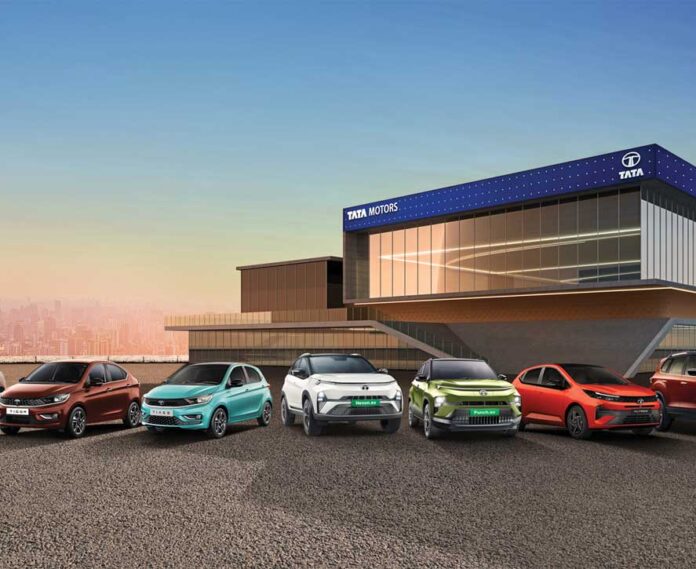
Tata Motors Passenger Vehicles Ltd. (TMPV) has announced a price increase of up to ₹25,000 across its passenger vehicle portfolio, covering both internal combustion engine (ICE) models and electric vehicles (EVs). The revised prices will come into effect from September 1, 2026.
According to the company, the price revision is aimed at partially offsetting rising input costs and continued inflationary pressures. The extent of the increase will vary across models and variants, with Tata Motors stating that the changes have been calibrated to preserve the overall value proposition of its products.
The company also noted that it continues to absorb a significant portion of the cost increases, with only part of the additional burden being passed on to customers through the latest price revision.
The price hike comes against the backdrop of a challenging cost environment despite strong sales momentum in the first quarter of FY27. Tata Motors reported a 46% year-on-year increase in domestic passenger vehicle volumes, while electric vehicle sales more than doubled during the quarter.
Revenue from operations stood at ₹20,667 crore, while Profit Before Tax (PBT) was reported at ₹2,970 crore and Profit for the Period at ₹2,556 crore.
However, profitability remained under pressure, with the company’s EBITDA margin declining to 7.4%. Higher raw material costs, including steel, aluminium and battery-related expenses, along with foreign exchange losses and supply-chain disruptions affecting Jaguar Land Rover, weighed on margins.
The combination of strong volume growth and rising input costs has prompted Tata Motors to take calibrated pricing action across its passenger vehicle range from September 1.
Higher commodity prices and supply-chain challenges have emerged as key factors behind the latest price revision. EV battery costs, in particular, have increased, with battery cells reportedly rising by around 10% quarter-on-quarter, adding pressure to the cost structure of electric vehicles.
Foreign exchange movements and exceptional employee separation costs have also contributed to the pressure on profitability.
Tata Motors has absorbed a substantial portion of the increase in costs but is now passing on part of the impact through selective price revisions. The company is expected to apply different increases across models and variants rather than implementing a uniform hike throughout its portfolio.
With SUVs continuing to play a central role in Tata Motors’ passenger vehicle strategy, the latest pricing action is aimed at balancing higher costs with customer value while protecting margins and maintaining competitiveness in India’s passenger vehicle market.