
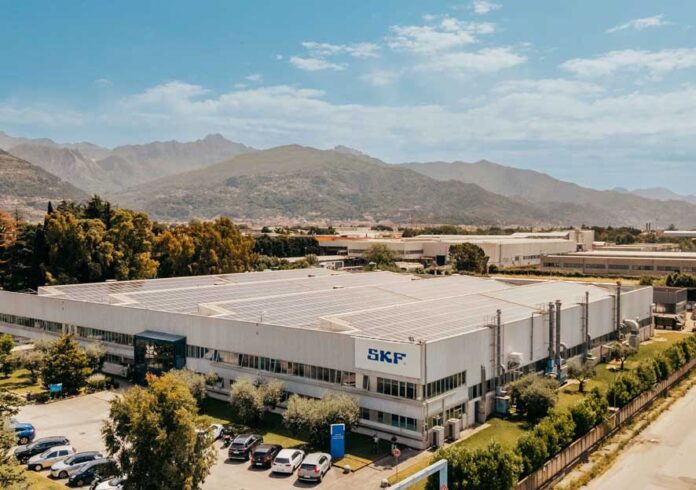
SKF has strengthened its global sustainability agenda by announcing that six additional manufacturing facilities across its worldwide operations have achieved decarbonized status, bringing the Group closer to its goal of fully decarbonized operations by 2030.
The newly decarbonized sites are located in Nilai (Malaysia), Puebla (Mexico), Haridwar and Pune (India), Massa (Italy), and Ladson (United States), reflecting SKF’s continued progress across key global manufacturing hubs.
To be recognised as decarbonized, each facility must achieve a 95% reduction in Scope 1 and Scope 2 greenhouse gas emissions compared to the 2019 baseline, alongside demonstrating continuous improvement in energy efficiency. The sites are also required to present a clear roadmap to eliminate or offset any remaining emissions.
Commenting on the milestone, Sofie Runius Cederberg, Head of Sustainability at SKF, said, “We are proud to add six more decarbonized SKF factories, marking an important milestone in our net-zero journey. By reducing the carbon footprint of our operations and products, we are enabling our customers to develop more sustainable solutions while supporting society’s transition to a low-carbon future.”
SKF’s decarbonization efforts form a core part of its broader net-zero strategy, focusing on energy efficiency, renewable energy adoption, and sustainable manufacturing practices across its global footprint.
Key achievements at the newly decarbonized sites include transitioning to renewable electricity and phasing out fossil fuel-based heating systems. In addition, investments have been made in energy-efficient technologies such as heat pumps and advanced chillers with energy savings being documented and verified even during periods of increased production.
“Climate change is a global challenge, and this achievement reflects our commitment to climate action and operational excellence. By investing in renewable energy, energy efficiency, and innovative solutions, we are also increasing our own resilience by lowering our energy demand”, says Susanne Larsson, Chief Financial Officer, Chief Sustainability Officer and SVP Finance.
The six factories join the previously recognized facilities in Steyr, Austria, Tudela, Spain, and Gothenburg, Sweden. These nine decarbonized factories represent almost 20% of SKF’s baseline manufacturing emissions. SKF’s climate targets are validated by the Science Based Targets initiative (SBTi), confirming that the decarbonization pathway is grounded in the latest climate science. This achievement underscores that SKF is on track to achieve its SBTi-approved goal for decarbonized operations by 2030.