
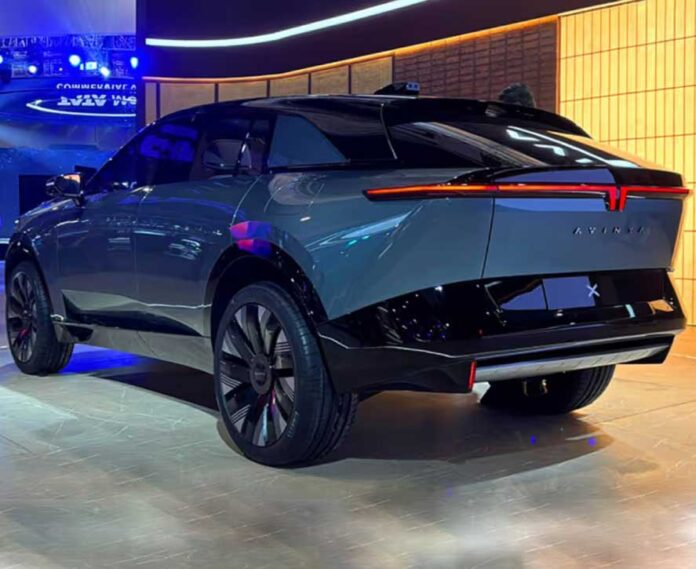
Tata Motors is preparing to accelerate its premium electric vehicle strategy by adopting a platform developed through the partnership between Jaguar Land Rover (JLR) and Chinese automaker Chery Automobile for its upcoming Avinya range. The move is expected to help the company address delays in its premium EV roadmap while strengthening its presence in India’s increasingly competitive electric vehicle market.
According to reports, the first Avinya model based on the new architecture is expected to debut in 2027, followed by a second model around 2029. Additional products could be introduced as Tata Motors expands the Avinya portfolio across multiple segments.
The decision comes after Tata Motors’ earlier plan to develop Avinya vehicles on JLR’s Electrified Modular Architecture (EMA) failed to progress as originally envisioned. The EMA platform had initially been expected to support premium electric vehicles targeted for launch in the middle of the decade.
Instead, Avinya models will now be built on the Freelander platform, developed through the JLR-Chery collaboration in China. Tata Motors stated that Avinya is being positioned as a global premium EV brand that will leverage multiple scalable platforms and architectures while retaining Tata Motors’ own strengths in design, engineering, and vehicle integration.
The company emphasized that its ongoing collaboration with JLR and its strategic partners will remain a key component of its premium EV strategy as it seeks to expand the Avinya brand across domestic and international markets.
Under the proposed manufacturing arrangement, the first Avinya vehicle is expected to be imported from China in completely knocked down (CKD) form and assembled at Tata Motors’ upcoming manufacturing facility in Tamil Nadu. Efforts to localise components and increase domestic content are reportedly already underway.
Industry observers view the platform-sharing arrangement as a practical solution that allows Tata Motors to accelerate product development timelines and gain access to advanced EV technologies without the significant investment and time required to develop a new architecture from the ground up.
While leveraging the Freelander platform addresses near-term product requirements, Tata Motors is also believed to be continuing work on its own dedicated electric vehicle architecture for future applications.
The move comes at a time when competition in India’s electric passenger vehicle segment is intensifying. Although Tata Motors remains the country’s largest EV manufacturer, competitors including Mahindra & Mahindra and JSW MG Motor India have significantly expanded their electric vehicle portfolios in recent years.
Electric vehicles currently account for a growing share of Tata Motors’ passenger vehicle business, and the company has set an ambitious target of increasing EV contribution to 30 percent of total sales by 2030. The Avinya lineup is expected to play a crucial role in achieving that objective by strengthening Tata Motors’ position in the premium EV segment, where customers increasingly demand advanced technology, software-driven features, and longer driving ranges.
The development also reflects a broader trend within India’s automotive industry, where manufacturers are increasingly accessing Chinese EV technologies through licensing agreements and platform partnerships rather than direct investment structures. With regulatory scrutiny on Chinese investments remaining stringent, technology-sharing arrangements have emerged as a preferred route for Indian automakers seeking faster access to advanced electric vehicle platforms and capabilities.
As India’s EV market continues to evolve, the Avinya programme is expected to be a key pillar of Tata Motors’ long-term strategy to compete in the premium electric mobility space both in India and overseas.