
India’s electric mobility ecosystem is at a critical inflection point. While the rapid growth of EV adoption has transformed urban transportation over the past few years, recent disruptions in the ride-hailing segment have highlighted the importance of operational reliability, service consistency, and sustainable business models. The slowdown of BluSmart, which had established itself as a prominent EV-first mobility platform, has created a noticeable gap in the premium, fleet-led mobility space, leaving customers and enterprises searching for dependable alternatives.
At the same time, the shift presents a significant opportunity for emerging mobility providers to redefine customer expectations through technology-driven operations, disciplined fleet management, and a stronger focus on experience-led services. As the industry moves beyond early adoption and pilot programs, success will increasingly depend on the ability to deliver scalable, reliable and trust-based mobility solutions.
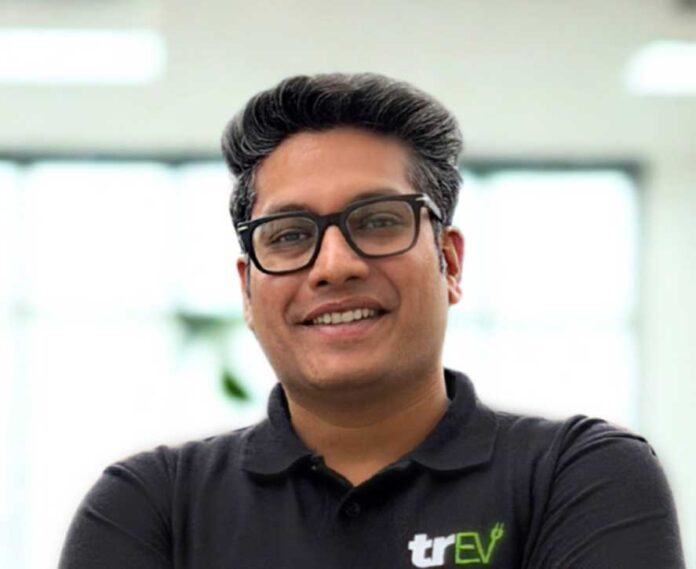
In this interaction with Autoguide, Mr. Naveen Gupta, Founder of Trev Mobility, shares his perspective on the evolving EV mobility landscape, the opportunities emerging from the current market vacuum, and the role fleet-led electric mobility models will play in shaping the future of sustainable transportation in India.
What specific gaps in reliability, service consistency, and fleet operations has this vacuum created?
The biggest gap is consistency. Customers today expect the same level of reliability every time they book a ride, whether it is an airport transfer, a corporate commute, or an intercity journey. However, the mobility ecosystem has often struggled to deliver that consistency at scale.
The challenge is not simply vehicle availability. It is ensuring that vehicles are maintained properly, drivers are adequately trained, charging infrastructure is dependable, and service standards remain uniform across locations. Any disruption in this chain can directly impact customer trust.
As mobility evolves, reliability is becoming a differentiator rather than a basic expectation. The market increasingly needs operators that can deliver predictable experiences through disciplined fleet management and technology-led operations.
How are new-age mobility players redefining reliability and customer experience?
The definition of reliability has changed significantly over the last few years. Customers no longer evaluate mobility services solely on whether a ride is available. They look at punctuality, vehicle quality, ride comfort, safety, transparency, and the overall experience from booking to drop-off.
New-age mobility companies are leveraging technology to improve every stage of that journey. Real-time fleet monitoring, predictive maintenance, intelligent dispatch systems, and data-driven planning allow operators to identify potential issues before they impact customers.
At the same time, EVs are raising expectations around ride quality. Quieter cabins, smoother acceleration, and a more refined driving experience are helping redefine what customers expect from premium mobility services.
Why may fleet-led EV mobility models be better placed to deliver scale and predictability in this category?
Fleet-led models are naturally better positioned because they operate within a controlled environment. Operators can manage vehicle utilisation, charging schedules, maintenance cycles, and service quality through a centralised system rather than relying on fragmented ownership structures.
This creates greater operational visibility and allows for proactive decision-making. Fleet operators can optimise routes, monitor vehicle health in real time, and ensure vehicles are deployed efficiently based on demand patterns.
As EV adoption scales, success will depend less on the vehicle itself and more on how effectively the ecosystem is managed. Fleet-led models have the advantage of being able to control many of the variables that influence customer experience and operational reliability.
What will it take to build sustainable, scalable, and trust-driven EV mobility models in India?
Building sustainable EV mobility models requires a much broader approach than simply increasing the number of electric vehicles on the road. The entire ecosystem must evolve together.
Reliable charging infrastructure, strong service networks, battery lifecycle management, access to financing, and technology-enabled fleet operations are all critical components of long-term success. Operators also need the ability to maintain high vehicle uptime while delivering a consistent customer experience.
Trust is earned through reliability over time. Customers will adopt EV mobility at scale when they are confident that it offers the same convenience, dependability, and service quality they expect from conventional transportation options.
What will it take for players like Trev to convert this market vacuum into a sustainable long-term mobility opportunity?
The opportunity lies in solving operational challenges that have historically limited customer confidence in mobility services. The companies that succeed will be those that focus on reliability, efficiency, and long-term customer trust rather than short-term expansion.
For Trev, this means continuing to invest in fleet intelligence, charging partnerships, predictive maintenance, operational planning, and customer experience. It also means building a business model that is sustainable from both an environmental and commercial standpoint.
The market is moving beyond early adoption. Customers are increasingly evaluating mobility providers based on consistency and dependability, which creates a strong opportunity for operators that can execute effectively at scale.
How is Trev Mobility positioning itself to address these gaps in the evolving mobility landscape?
At Trev Mobility, we believe the future of mobility will be defined by reliability, sustainability, and operational excellence. Our focus is on building a premium electric mobility platform that delivers a consistent experience across planned urban and intercity travel.
We have designed our operations around structured fleet deployment, proactive vehicle monitoring, disciplined charging management, and technology-driven decision-making. This allows us to improve vehicle utilisation while maintaining high service standards.
Our goal is not simply to operate electric vehicles. It is to create a dependable mobility platform where customers can experience the benefits of electrification without compromising on convenience, comfort, or reliability.
What is the future of fleet-led EV mobility beyond early adoption and pilot phases?
The industry is entering a far more mature phase of growth. The conversation is no longer about whether EVs are viable. The focus now is on building the infrastructure, operational capabilities, and ecosystem partnerships required to scale them effectively.
Over the next few years, we are likely to see fleet-led EV mobility become a mainstream component of India’s transportation ecosystem, particularly in segments such as airport transfers, corporate mobility, and intercity travel where utilisation levels are high and operational efficiencies can be maximised.
Technology will play an increasingly important role in this evolution. Predictive maintenance, intelligent energy management, real-time diagnostics, and software-led fleet optimisation will help operators improve reliability while lowering operating costs. The future will belong to companies that can combine electrification with operational discipline and consistently deliver superior customer experience.