
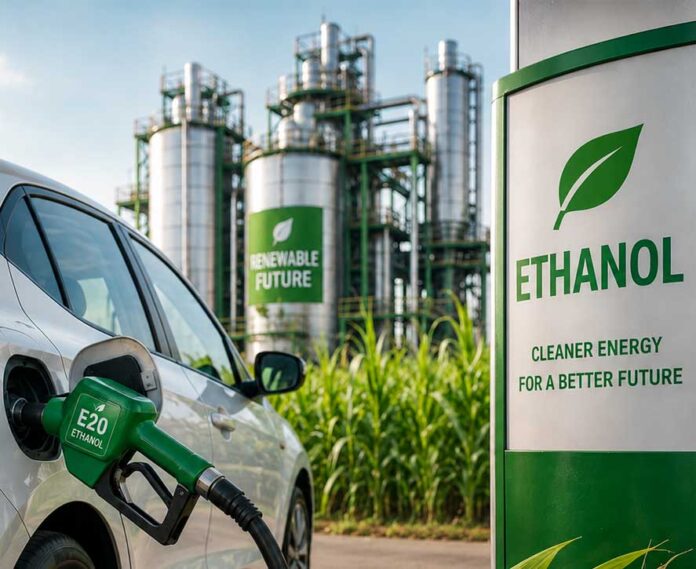
The Grain Ethanol Manufacturers Association (GEMA) has welcomed the Central government’s draft Corporate Average Fuel Efficiency (CAFE)-III norms, stating that the proposed framework gives renewed policy support to ethanol-based mobility by recognising renewable fuels within India’s fuel efficiency compliance mechanism.
According to GEMA, the draft regulations reinforce a technology-neutral approach to reducing transport-sector emissions while strengthening the policy ecosystem for higher ethanol blends, flex-fuel vehicles and other renewable fuel technologies.
A key feature of the draft CAFE-III norms is the introduction of Carbon Neutrality Factors (CNF) for ethanol-blended fuels, flex-fuel vehicles, biofuels and compressed biogas. The proposal assigns an 8 per cent Carbon Neutrality Factor to India’s current ethanol blending level, enabling automakers to receive additional compliance benefits for vehicles operating on cleaner fuels.
Commenting on the development, C.K. Jain, President of GEMA, said, “The draft CAFE-III framework represents an important evolution in India’s clean mobility policy. By recognising the carbon reduction potential of ethanol and other renewable fuels, the government has reinforced the need for a technology-neutral approach to decarbonising the transport sector.”
GEMA noted that the draft framework builds on the success of the Ethanol Blended Petrol (EBP) Programme, which has helped India emerge as one of the world’s leading biofuel markets while reducing its dependence on imported crude oil.
The association added that greater adoption of ethanol-based fuels would not only enhance India’s energy security but also create significant economic opportunities for farmers, rural industries and allied sectors.
Furthermore, GEMA said the proposed CAFE-III framework reflects a balanced policy by recognising multiple low-carbon mobility pathways rather than focusing on a single technology. The association believes this approach will encourage innovation, provide greater flexibility to automobile manufacturers and further strengthen the role of renewable fuels in India’s transition to cleaner transportation.