
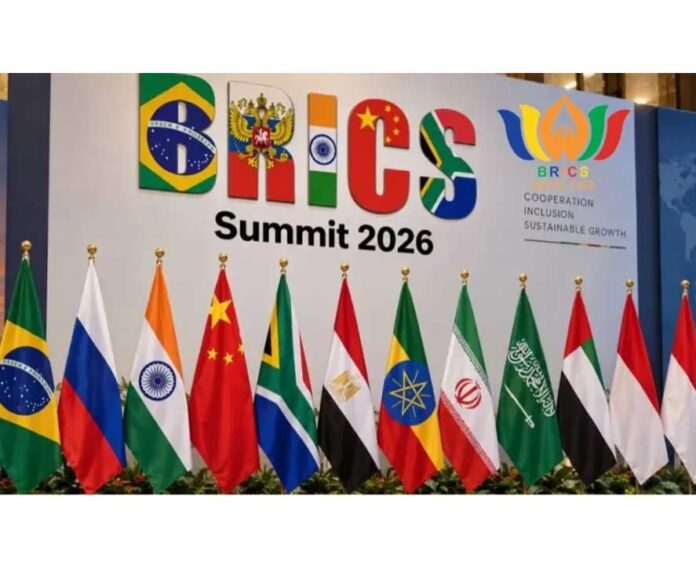
As critical minerals become increasingly important to the global energy transition, BRICS leaders have called for reliable, diversified and resilient supply chains for minerals essential to zero- and low-emission technologies and energy security.
Delivering the concluding address at the BRICS summit, Prime Minister Narendra Modi warned against the weaponisation of critical minerals, saying such practices could undermine shared economic progress and disrupt the transition towards cleaner energy technologies.
Critical minerals including lithium, cobalt, nickel, copper, graphite and rare earth elements are essential for manufacturing electric vehicles (EVs), batteries, semiconductors, solar panels, wind turbines and advanced defence systems. However, global supplies remain vulnerable to geopolitical, trade and production-related disruptions.
India Steps Up Overseas Lithium Exploration
Speaking to reporters on the sidelines of a global summit, Coal and Mines Minister G Kishan Reddy said India was in discussions with Argentina to acquire five additional lithium blocks. Talks are also underway with Australia and Chile as India seeks to strengthen access to overseas mineral resources.
Reddy noted that India has limited domestic lithium reserves, making overseas partnerships and asset acquisition important for securing long-term supplies of the strategic mineral.
The government has identified 30 minerals as strategically important and launched the National Critical Mineral Mission in 2025 with a financial outlay of Rs 34,300 crore. The initiative focuses on exploration, mining, processing, recycling and the acquisition of mineral assets overseas.
According to officials, the Geological Survey of India has undertaken around 300 critical mineral exploration projects during the current year.
The government is also encouraging Indian private companies to acquire mineral blocks overseas, undertake mining and semi-processing activities and bring the resulting raw materials back to India.
India Expands Global Critical Mineral Partnerships
India has been pursuing a series of international partnerships aimed at diversifying its critical mineral supply chains.
In May, India and the US signed a strategic framework covering the mining and processing of critical minerals and rare earth elements. The framework is aimed at encouraging co-investment in supply chains and strengthening resilience against market coercion.
In Australia, state-run Khanij Bidesh India Limited has partnered with the country’s critical minerals office for joint exploration activities.
India is also working with France through a dedicated joint working group and has joined the Quad Critical Minerals Initiative with the US, Japan and Australia. The initiative seeks to establish more resilient, secure and trusted critical mineral supply networks.
Critical Mineral Parks Planned in Four States
Alongside overseas partnerships, India is also focusing on developing domestic processing capabilities.
The government is establishing critical mineral parks in Andhra Pradesh, Odisha, Maharashtra and Gujarat. These facilities are expected to support the processing of minerals such as lithium, nickel and zirconium, as well as the production of rare earth magnets.
Experts, however, believe that India’s challenge extends beyond identifying mineral resources. Converting discoveries into commercially viable mines, developing domestic processing and separation technologies, and reducing dependence on overseas supply chains will be crucial to building long-term mineral security.
E-Waste Recycling Could Meet Up to 30% of Demand
Recycling is emerging as another important component of India’s critical mineral strategy.
The government is working on an incentive scheme to promote the recovery of critical minerals from e-waste, with an initial allocation of Rs 1,500 crore. Around 125 companies have applied under the proposed programme, of which 58 have been shortlisted in the first phase.
According to the government, recycling e-waste could potentially meet around 25-30% of India’s requirement for critical minerals.
With EV adoption, battery manufacturing and renewable energy deployment accelerating, securing critical minerals is becoming increasingly important for India’s energy and industrial ambitions. A combination of overseas resource partnerships, domestic exploration, processing capacity and recycling could help India build a more resilient supply chain while reducing its exposure to global disruptions.