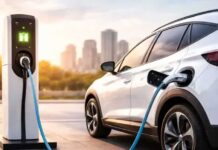

India’s electric vehicle (EV) revolution is entering a new phase. While the industry’s early growth was driven by policy support, manufacturing expansion and rising consumer adoption, the spotlight is now shifting towards the technologies that will define its future. As the country scales up its EV ambitions, developing indigenous capabilities in critical areas such as power electronics, batteries, semiconductors, electric drive systems and embedded software is becoming increasingly important to strengthen competitiveness and reduce reliance on imported technologies.
In this guest column, Abhilash Maurya, Co-Founder and CEO of Naxatra Labs, discusses why homegrown engineering and innovation will be key to building a resilient and globally competitive EV ecosystem. Drawing on recent technological breakthroughs and industry developments, he explains how India’s growing R&D capabilities can unlock greater value, enhance supply chain resilience and create solutions specifically designed for the country’s unique operating conditions.
Much of the conversation around India’s electric vehicle industry has traditionally centred on vehicle launches, charging infrastructure and government incentives. However, over the past few years, engineering breakthroughs have steadily emerged as an equally important part of the narrative.
A notable example came earlier this year when researchers at the Indian Institute of Science (IISc) addressed a long-standing challenge in gallium nitride (GaN) power chips by redesigning a critical transistor component. The breakthrough resulted in a more efficient and reliable chip capable of handling the high-power demands of electric vehicles more effectively—an advancement particularly relevant for India, where extreme summer temperatures place additional stress on EV power electronics.
The IISc breakthrough was not a one-off. A few months later, the Ministry of Electronics and Information Technology (MeitY) unveiled an indigenously developed 30 kW Wide Band Gap (WBG)-based Integrated Drive System (IDS), jointly developed by C-DAC, IIT Madras and Lucas TVS. The system integrates the electric motor and inverter into a single compact unit, replacing the conventional configuration where the two operate separately. This improves efficiency, reduces weight and lowers system costs, while also cutting India’s reliance on imported powertrain components. Notably, the technology is now ready for commercialisation, a sign that indigenous engineering is beginning to move from research laboratories to the factory floor.
These breakthroughs have come at a time when India’s EV industry is beginning to scale up. From just 2,344 electric vehicles sold in FY15, annual sales rose to 16,182 in FY16, aided by the government’s FAME-I (Faster Adoption and Manufacturing of Hybrid and Electric Vehicles in India) scheme. The momentum continued with the rollout of FAME-II in FY20, and by FY24, annual EV sales had crossed the one million mark for the first time. In FY25, sales surpassed two million units as legacy automakers such as Tata Motors, Mahindra & Mahindra, Bajaj Auto and TVS Motor expanded their EV portfolios, while newer players such as Ather Energy and Ola Electric continued to double down on the segment. By FY26, annual EV sales had reached 2.55 million units.
The numbers, however, tell another story. More than 85% of EV sales continue to come from electric two- and three-wheelers, while adoption in the passenger vehicle segment remains relatively muted. High upfront costs and limited public charging infrastructure continue to weigh on consumer adoption.
If this trend continues, India’s target of 30% EV penetration in new vehicle sales by 2030 will be a tall order from the current level of around 8.5%. This is where engineering breakthroughs could make a meaningful difference in lowering costs, improving efficiency and reducing dependence on imported technologies.
The question, therefore, is no longer whether India can manufacture EVs. It is whether it can build the technologies that power them. The country has made significant progress in localising vehicle assembly, but many of the critical technologies like battery cells, power electronics, semiconductors and electric drive systems continue to rely on imports or overseas intellectual property, leaving Indian manufacturers exposed to supply chain disruptions, volatile input costs and geopolitical uncertainties.
This is why indigenous engineering deserves greater attention. It isn’t just about reducing that exposure and creating intellectual property, capturing a larger share of the value chain and developing products tailored to Indian conditions. Vehicles on Indian roads must contend with extreme summer temperatures, dust, monsoon flooding and stop-and-go traffic conditions that often differ from those in mature EV markets. Engineering solutions designed with these realities in mind can improve efficiency, reliability and affordability.
The conversation around sovereign capability has so far centred on areas such as artificial intelligence and semiconductors. The same question is now beginning to emerge in the EV ecosystem. As EVs become increasingly software-driven and electronics-intensive, countries that own the underlying technologies including batteries, motors, power electronics and embedded software will capture far greater economic value than those that merely assemble vehicles.
India’s first phase of the EV journey was about accelerating adoption through policy support and consumer incentives. The next phase should be about building the engineering capabilities that will define the industry’s future. Recent breakthroughs suggest that the journey has already begun. The challenge now is to sustain the momentum through continued investment in research and development, stronger industry-academia collaboration and policies that encourage innovation alongside manufacturing.