
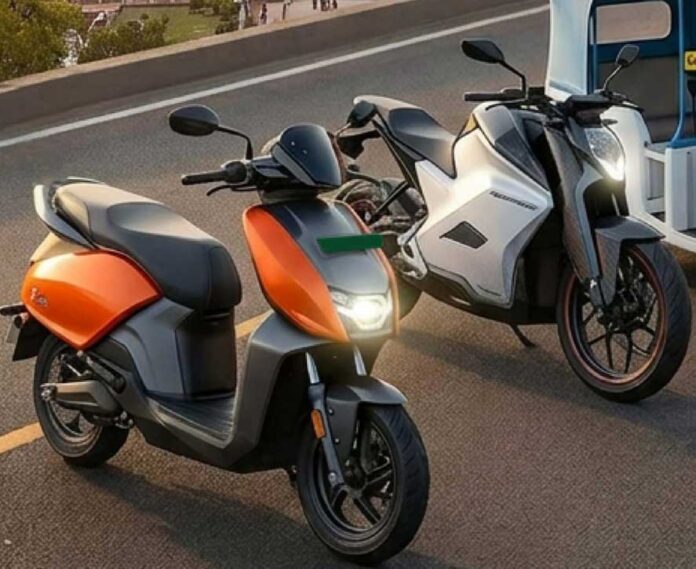
Leading automotive industry bodies have called on the Delhi government to adopt a phased approach to the implementation of its proposed EV Policy 2026, particularly the provision that would permit only electric two-wheelers to be registered in the capital from April 1, 2028.
In a representation submitted to Chief Minister Rekha Gupta, the Society of Indian Automobile Manufacturers (SIAM) argued that modern Bharat Stage VI (BS VI) compliant two-wheelers equipped with electronic port fuel injection and three-way catalytic converters generate minimal particulate matter (PM) emissions, which are among the key contributors to Delhi’s air pollution concerns. According to SIAM, restricting registrations of new BS VI-compliant two-wheelers may therefore have a limited impact on improving air quality.
Instead, the industry body has recommended prioritizing the removal of older and more polluting vehicles from the roads. SIAM noted that pre-BS IV two-wheelers aged between 10 and 15 years account for nearly 99.5 percent of particulate matter emissions from the segment. As a result, it has urged policymakers to focus on vehicle scrappage and fleet modernization rather than imposing restrictions on newer, cleaner internal combustion engine (ICE) models.
Industry stakeholders have also highlighted concerns around consumer affordability. A senior executive from a leading two-wheeler manufacturer pointed out that the higher upfront cost of electric vehicles could make a complete transition challenging for many buyers, suggesting that registrations of ICE-powered two-wheelers should continue alongside EV adoption efforts.
The Federation of Automobile Dealers Associations (FADA) has similarly advocated a gradual and well-planned transition. Saharsh Damani, Chief Executive Officer of FADA, emphasized that policymakers should consider the broader impact of the proposed measures on consumers, dealerships, workshops, and the overall automotive ecosystem.
Damani cautioned that an outright ban on new ICE two-wheeler registrations in Delhi could simply shift vehicle purchases to neighbouring states rather than significantly accelerating EV adoption within the capital. He stressed that a staggered implementation strategy would be more practical and less disruptive for all stakeholders involved.
Both SIAM and FADA have maintained that while increasing EV penetration remains an important objective, policy measures should be aligned with market realities and designed to minimize disruptions across the automotive value chain, including dealers, consumers, and service networks.