
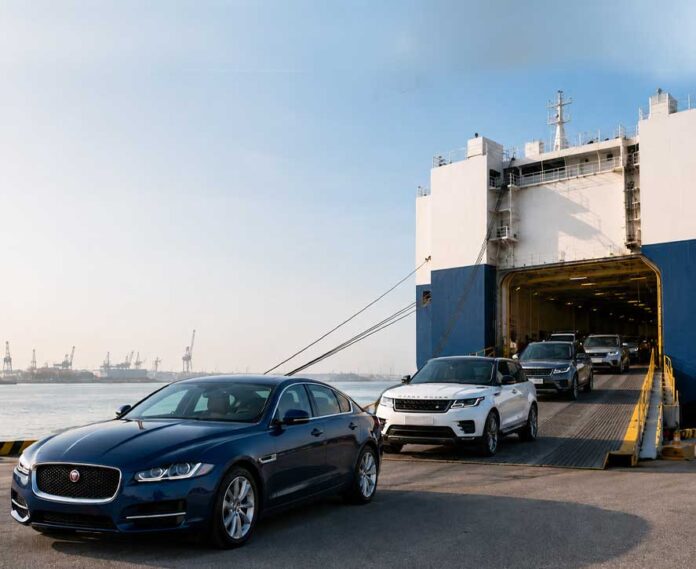
India will permit the import of up to 3.78 lakh conventional passenger vehicles from the United Kingdom at concessional customs duty rates over the first 15 years of the India-UK Comprehensive Economic and Trade Agreement (CETA), which is set to come into effect on July 15. Under the agreement, import tariffs on eligible UK-built vehicles will be gradually reduced from the current levels of up to 110% to as low as 10% through a quota-based framework.
The agreement is expected to improve market access for premium British automotive brands in India while also creating new export opportunities for Indian vehicle manufacturers in the UK, particularly in the electric, hybrid, and hydrogen-powered vehicle segments.
During the first year of implementation, India will allow the import of 20,000 passenger vehicles from the UK. Of these, 10,000 units will be allocated to larger-engine vehicles exceeding 3,000cc for petrol models and 2,500cc for diesel models, attracting a reduced customs duty of 30%, down from 110%. Another 5,000 units each will be permitted in the mid-size and mass-market passenger car categories, with tariffs reduced to 50% from 66%.
The annual import quota will gradually increase to 37,000 units by the fifth year. Thereafter, customs duties across all categories will continue to decline, eventually reaching 10%. From the 15th year onward, imports will be capped at 15,000 vehicles annually at the concessional 10% duty rate. Over the first 15 years, the cumulative quota will total 3.78 lakh conventional passenger vehicles.
The trade pact also opens the UK market to Indian-made electric, hybrid, and hydrogen-powered passenger vehicles. Beginning in the sixth year of the agreement, Indian manufacturers will be allowed to export such vehicles duty-free to the UK in the price range of GBP 20,000 to GBP 80,000. The export quota will gradually rise to 88,000 units by the 15th year and remain at that level thereafter. The provision is expected to benefit Indian automakers such as Tata Motors, Mahindra & Mahindra, and Maruti Suzuki as they expand their electrified vehicle portfolios.
At the same time, India has retained safeguards for its domestic mass-market EV industry. The agreement excludes electric, hybrid, and hydrogen-powered passenger vehicles priced below GBP 40,000 from tariff concessions, protecting local manufacturers focused on affordable electric mobility. No duty reductions will be available for these alternative-fuel vehicles during the first five years of the agreement.
From the sixth year onwards, premium electrified vehicles priced between GBP 40,000 and GBP 80,000 will attract a reduced duty of 50% under a quota of 400 units, while vehicles priced above GBP 80,000 will face a 40% duty under a quota of 4,000 units. By the tenth year, duties for both categories will be reduced to 10%.
The agreement also excludes zero-emission two-wheelers, buses, and trucks from tariff reduction commitments, allowing India to retain full policy flexibility in these strategically important segments while supporting the continued growth of its domestic automotive industry.