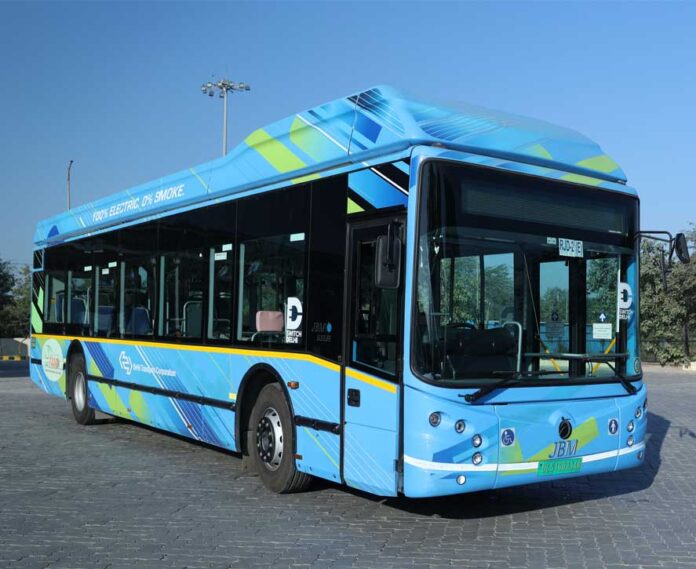
JBM Auto Limited has emerged as the market leader in India’s electric bus segment, capturing a 49% share in May 2026, according to data from the Vahan portal. The company registered 157 electric buses during the month, the highest among all industry players, reinforcing its strong position in the country’s rapidly growing electric public mobility market.
The achievement highlights JBM Auto’s expanding presence in the electric commercial vehicle space and underscores its contribution to India’s transition towards sustainable and zero-emission public transportation.
JBM Auto has retained its market leadership after having posted highest electric bus registrations in FY26 and now registering a staggering 49% share in May 2026, reflecting strong execution and growing adoption of its electric mobility solutions. The milestone is further reinforced by the recent integration of Telangana’s registration data into the Vahan portal from May 2026, offering a more comprehensive view of national performance.
This growth is underpinned by JBM’s advanced manufacturing capabilities, enabling the development of high-strength, lightweight bus platforms tailored for efficient and sustainable public transport. The company continues to leverage global technologies to deliver reliable, high-performance electric mobility solutions at scale.
Commenting on the achievement, Mr. Nishant Arya, Vice Chairman and Managing Director, JBM Auto, said, “Our growth reflects a clear focus on decarbonising public transport while aligning with global benchmarks in sustainable mobility. At JBM Auto, we are building solutions that combine innovation, efficiency, and user-centric design. Our aim is not only to reduce emissions, but also to enhance everyday mobility by making it smarter, safer, and more accessible.”
The company operates the world’s largest dedicated integrated electric bus manufacturing facility (outside China), with an annual capacity of 20,000 buses, based in the NCR region. Its electric buses have collectively clocked over 400 million e-kilometres, served more than one billion passengers, and contributed to saving over one billion kilograms of CO2 emissions till date.