
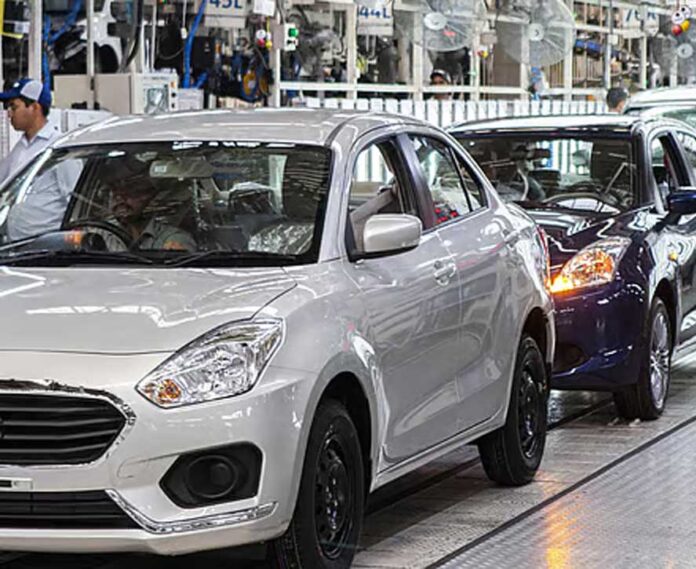
India’s passenger vehicle (PV) industry delivered a stellar performance in July 2026, with nearly all major automakers posting record domestic sales, providing a strong start to the festive season. Despite price hikes across SUVs, entry-level cars and electric vehicles, robust consumer demand pushed total industry sales to an estimated 4.7 lakh units, marking a growth of over 33 per cent compared to around 3.5 lakh units sold in July 2025.
The strong momentum has been supported by a combination of favourable policy measures and improving consumer sentiment. GST rationalisation, RBI repo rate cuts and income-tax relief have improved affordability, particularly for first-time buyers. Fresh model launches, pre-price-hike purchases and a delayed monsoon—which reduced disruptions to dealership footfalls and vehicle logistics—also contributed to the surge in demand.
July 2026 Passenger Vehicle Sales Rankings
| Rank | OEM | July 2026 Sales | July 2025 Sales | YoY Growth |
| 1 | Maruti Suzuki | 200,123 | 140,570 | 42.4% |
| 2 | Tata Motors | 62,611 | 39,521 | 58.4% |
| 3 | Mahindra & Mahindra | 60,048 | 49,871 | 20.4% |
| 4 | Hyundai Motor India | 54,210 | 43,973 | 23.3% |
| 5 | Toyota Kirloskar Motor | 30,516 | 29,159 | 4.7% |
Maruti Suzuki Becomes the 1st Indian Automaker to Cross 2 Lakh Monthly Domestic Sales
Market leader Maruti Suzuki India achieved a historic milestone by recording its highest-ever monthly domestic sales of 200,123 units, up 42.4 per cent year-on-year. The company became the first Indian passenger vehicle manufacturer to cross the 2 lakh domestic sales mark in a single month.
The performance was driven by a 34 per cent revival in small car sales, higher CNG and electric vehicle volumes, and a 44 per cent increase in SUV sales, helping the company expand its market share.
“For the first time, an Indian automobile OEM has crossed the 2 lakh domestic sales mark in a month. It clearly shows the love and affection of Indian customers for our brand,” said Partho Banerjee, Senior Executive Officer (Marketing & Sales), Maruti Suzuki India.
He added that demand has strengthened across entry-level cars and SUVs, while improved production capacity has enabled the company to meet growing customer demand.
Tata Motors Holds Second Position with Strong SUV and EV Demand
Tata Motors retained the second spot in the domestic PV market after reporting 62,611 units in July, reflecting an impressive 58 per cent year-on-year growth.
The company’s performance was supported by robust demand across its SUV portfolio and electric vehicle lineup. Tata’s EV wholesales crossed 15,000 units during the month, while the Punch recorded its highest-ever monthly sales.
Mahindra Continues SUV-Led Growth Momentum
Mahindra & Mahindra remained in third position with domestic sales of 60,048 units, registering a 20 per cent increase over July last year.
Commenting on the performance, Nalinikanth Gollagunta, CEO, Automotive Division, Mahindra & Mahindra, said:
“The total vehicle sales stood at 1,03,860, a 26 per cent YoY growth reflecting all-round demand traction across the portfolio.”
Hyundai Improves Domestic and Export Performance
Hyundai Motor India strengthened its performance in July despite remaining fourth in the domestic rankings. The company reported 54,210 domestic sales, representing 23 per cent year-on-year growth, led by sustained demand for the Creta and i20.
Hyundai also achieved its highest monthly exports in over 100 months, dispatching 21,150 units, up 31.4 per cent compared to the previous year.
“We have kicked off the new quarter on a strong note. Furthermore, delivering 21,150 export units, our highest in more than 100 months, reinforces our relentless commitment to Make in India, Made for the World,” said Tarun Garg, Managing Director & CEO, Hyundai Motor India.
Toyota Remains Steady; MG and Nissan Register Strong Growth
Toyota Kirloskar Motor maintained fifth place with domestic sales of 30,516 units, registering a modest 5 per cent growth.
Meanwhile, JSW MG Motor India posted 22 per cent growth, selling 8,158 units, supported by continued demand for its electric vehicle portfolio.
Among the standout performers, Nissan Motor India recorded one of the highest growth rates in the industry. Domestic dispatches surged 218 per cent to 4,518 units, driven by the launch of its new premium SUV, Tekton.
Industry Remains Cautiously Optimistic
Despite the strong festive-season opening, automakers remain watchful of several challenges that could impact profitability in the coming months.
Commodity inflation has already squeezed margins during the first quarter of FY27, while rising semiconductor costs, potential vehicle price hikes and the implementation of CAFE III emission norms are expected to increase manufacturing costs later this year.
According to Puneet Gupta, Director India & ASEAN, S&P Global Mobility, the industry also faces demand-related uncertainties.
“The biggest challenge from September will be the high base. If repo rates or fuel prices rise further, demand could come under pressure. At the same time, the Iran conflict poses a risk to oil prices, while prolonged disruption after the Japan earthquake could impact global supply chains,” he said.
Outlook
The July sales performance has given India’s passenger vehicle industry a strong platform heading into the festive season. With healthy retail demand, improving affordability and an expanding range of SUVs and electric vehicles, manufacturers are optimistic about sustaining momentum. However, rising input costs, regulatory changes and global geopolitical uncertainties remain key risks that the industry will closely monitor through the remainder of FY27.