
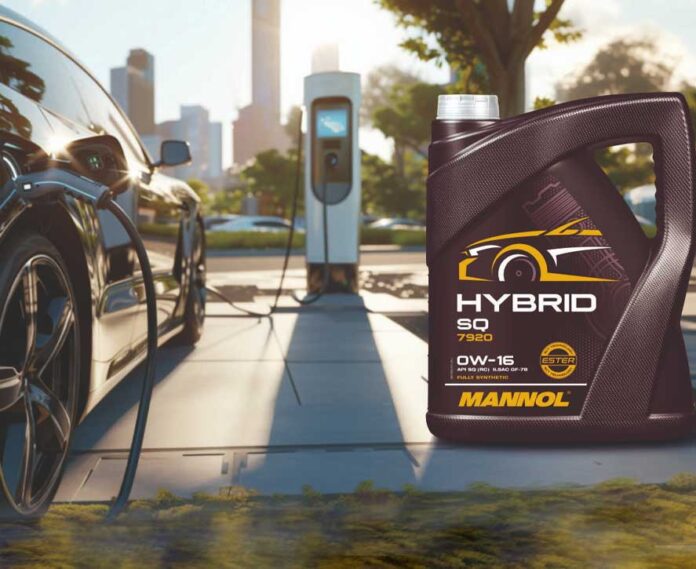
As hybrid vehicles become increasingly popular worldwide, the demands placed on engine lubricants are also evolving. MANNOL has highlighted the unique technical challenges hybrid powertrains present for engine oils and emphasized the importance of specially formulated lubricants that deliver enhanced engine protection, efficiency and long-term reliability.
Unlike conventional internal combustion engine vehicles that operate under relatively consistent thermal and mechanical conditions, hybrid powertrains are characterized by frequent engine start-stop cycles, repeated cold starts and constantly changing load profiles. These operating conditions place significantly greater demands on engine oil performance, particularly in terms of lubrication, wear protection and ageing resistance.
One of the biggest challenges for hybrid engines is the repeated transition between electric and combustion power. Since the internal combustion engine often operates intermittently and may not always reach optimal operating temperatures, the engine oil must quickly establish a stable lubricating film immediately after every restart. At the same time, repeated cold operation increases the likelihood of fuel dilution and condensation, which can alter oil viscosity and accelerate corrosion and deposit formation.
To address these challenges, modern hybrid engine oils require advanced additive technologies capable of maintaining lubrication performance while protecting against water contamination, fuel ingress and sludge formation.
Hybrid powertrains also optimize engine operation by keeping the internal combustion engine within its most efficient operating range. While this improves fuel economy, it can create localized thermal loads that place additional stress on the lubricant. As a result, engine oils must offer excellent oxidation stability and maintain their protective properties even under prolonged high-temperature conditions. Low-friction characteristics are equally important, as reducing internal friction contributes directly to improved fuel efficiency.
Commenting on the evolving lubrication requirements of hybrid vehicles, Konstantin Gaab, Managing Director of MANNOL / SCT Germany, said that hybrid engines often need to deliver maximum performance almost instantly, even when they have not yet reached their ideal operating temperature.
He explained that during situations such as rapid acceleration or overtaking, the engine oil must immediately create a reliable lubricating film while simultaneously providing superior wear protection, minimizing friction and maintaining thermal stability. According to Gaab, these operating characteristics clearly demonstrate why hybrid powertrains require engine oils specifically engineered for their unique duty cycles.
MANNOL also noted that some hybrid vehicle architectures integrate electric motors and power electronics in close proximity to the combustion engine, introducing additional considerations for lubricant compatibility. In such applications, engine oils must not only protect mechanical components but also be compatible with materials used alongside electrically active systems.
To meet these evolving requirements, MANNOL continues to develop engine oils specifically formulated for modern hybrid vehicles. Using high-quality base oils combined with advanced additive technologies, the company’s hybrid-compatible lubricants are designed to ensure rapid lubrication during cold starts, excellent oxidation resistance and effective protection against wear, corrosion and deposits.
By addressing the unique operating conditions of hybrid powertrains, MANNOL aims to help improve engine efficiency, operational reliability and long-term durability, enabling hybrid vehicles to deliver optimum performance under both everyday driving conditions and demanding situations.