Thailand has attracted more than $4.1 billion (approximately 137 billion baht) in investment commitments across its electric vehicle (EV) supply chain, reinforcing its status as Southeast Asia’s leading automotive manufacturing hub as the global industry accelerates its transition towards next-generation mobility.
According to the latest figures released by the Thailand Board of Investment (BOI), the investments span 198 projects covering the entire EV ecosystem, including battery electric vehicles (BEVs), hybrid powertrains, battery manufacturing, critical automotive components, and EV charging infrastructure.
The surge in investment comes as global automakers continue to diversify their manufacturing and supply chains amid evolving geopolitical dynamics, with Southeast Asia emerging as a key destination for next-generation automotive production.
Unlike several regional markets that are primarily focused on battery electric vehicles, Thailand has adopted a technology-neutral approach to electrification. Its policy framework supports the development and production of Hybrid Electric Vehicles (HEVs), Plug-in Hybrid Electric Vehicles (PHEVs), and Battery Electric Vehicles (BEVs), enabling a broader and more flexible transition toward cleaner mobility.
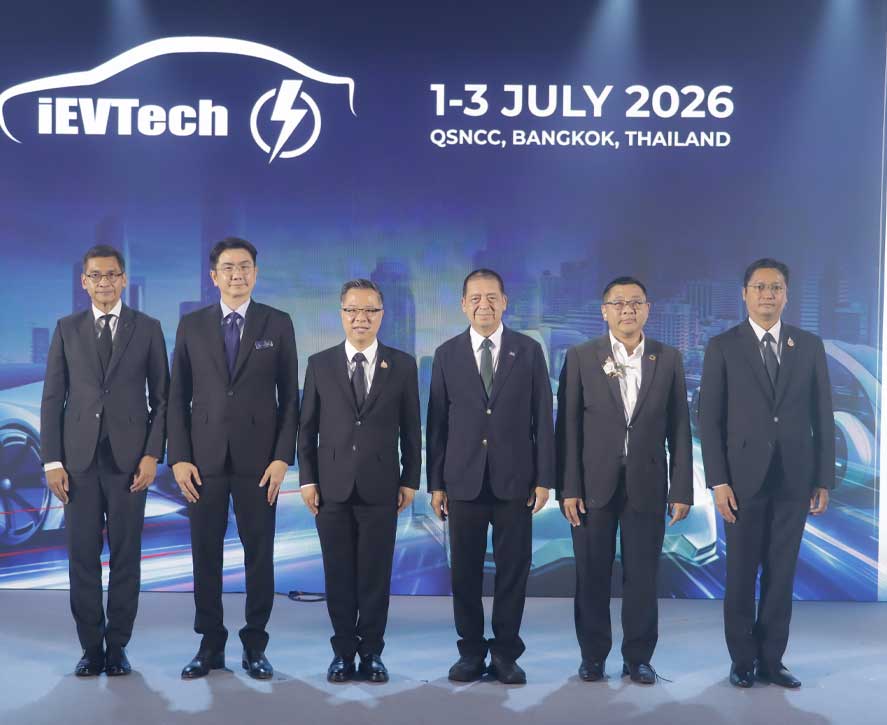
“The transition to electric vehicles is both a global challenge and a massive opportunity,” said Mr. Narit Therdsteerasukdi, Secretary General of the Thailand Board of Investment (BOI) and Secretary of the National EV Policy Board, speaking at the International Electric Vehicle Technology Conference (iEVTech) in Bangkok. “We must choose to be builders, not just consumers. By supporting all technologies—hybrid, plug-in hybrid, and battery electric—we allow legacy players and new entrants to invest and grow together, elevating Thai suppliers into the global value chain.”
This strategy is already paying off in the market. In 2025, electrified vehicles accounted for over 40% of all new vehicle registrations in Thailand, with HEVs leading at 21.8%, closely followed by BEVs at 19.6%.
The $4.1 billion investment pipeline is highly distributed, showing deep integration across the supply chain rather than top-level vehicle assembly alone:
- Battery EVs (BEVs): $1.18 billion (approx. 39.5 billion baht) across 18 projects, establishing an annual domestic production capacity of over 370,000 units.
- Hybrids (HEV & PHEV): Combined investments of $1.18 billion (approx. 39.3 billion baht) across 14 projects, capitalizing on Japanese automakers’ legacy hybrid technologies.
- Batteries & Energy Storage Systems (ESS): $1.00 billion (approx. 33.5 billion baht) across 57 projects, securing localized battery cell and pack manufacturing.
- Critical Components: $373 million (approx. 12.5 billion baht) across 49 projects, targeting high-value parts such as drive motors, battery management systems (BMS), and power control units.
- Charging Infrastructure: $292 million (approx. 9.8 billion baht) across 42 projects, funding over 22,900 charging stations nationwide, including more than 10,000 high-speed DC fast chargers.
This regulatory framework has pushed several major global automakers to localize production in Thailand. Mercedes-Benz Manufacturing pioneered local luxury BEV production in Thailand starting in 2022, followed by a major wave of Chinese EV manufacturers—including BYD, Great Wall Motor, SAIC Motor, and Aion—which established domestic assembly lines in 2024. The momentum continued into 2025 as Changan Auto and EV Primus launched their respective manufacturing operations, culminating in the 2026 production rollouts by South Korea’s Hyundai Mobility and China’s Omoda & Jaecoo. These manufacturing investments have culminated in the creation of more than 16,000 local jobs.
The BOI has also facilitated joint ventures and matchmaking through 18 “Sourcing Day” events. These sessions have paired more than 800 qualified Thai parts manufacturers with multinational automakers, resulting in over 1,200 business matches. The BOI estimates these sourcing links will generate over $1.79 billion (approx. 60 billion baht) in domestic procurement value, transitioning traditional tier-1 and tier-2 suppliers into the high-tech EV supply chain.
“Ultimately, we are leveraging sixty years of automotive expertise to position Thailand at the forefront of global mobility,” Mr. Narit said. “Our goal is to ensure that local industry and local workforce are the ones driving this next chapter of growth.”