
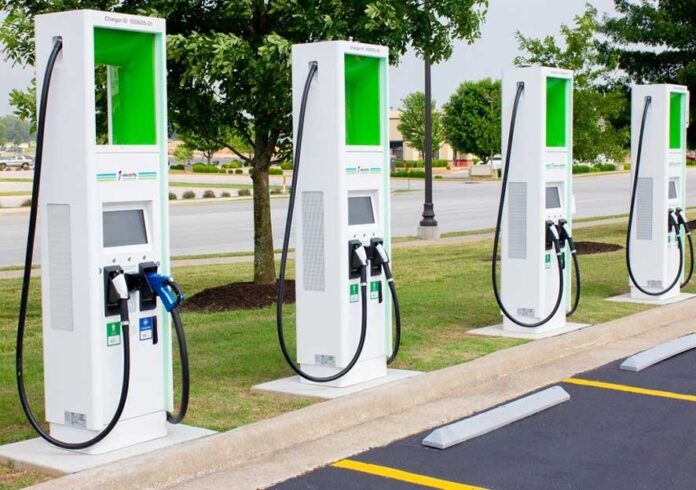
India significantly accelerated its electric mobility push in 2025 with the installation of over 27,000 electric vehicle (EV) charging stations at petrol pumps nationwide, strengthening the country’s public charging infrastructure and improving ease of EV adoption.
According to the Ministry of Petroleum & Natural Gas’ year-end review, a total of 27,432 EV charging stations are now operational at fuel retail outlets across India. Of these, 8,932 charging stations were installed under the FAME-II scheme, while oil marketing companies (OMCs) set up more than 18,500 chargers using their own capital expenditure.
By integrating EV chargers at existing petrol pumps—locations already familiar and accessible to motorists—the government aims to address range anxiety and make EV charging more convenient for both two-wheeler and passenger car users.
Energy Stations Along Major Corridors
As part of a broader transition towards integrated mobility solutions, public sector oil marketing companies are developing 4,000 ‘Energy Stations’ between 2024–25 and 2028–29 along highways, freight corridors, and other strategic locations.
These Energy Stations are being designed as multi-fuel mobility hubs, offering conventional fuels such as petrol and diesel alongside alternative energy options including biofuels, CNG, LNG (where feasible), and EV charging infrastructure.
As of 1 November 2025, 1,064 Energy Stations have already been commissioned across the country.
Focus on Trucking and Highway Safety
Beyond passenger mobility, the government also strengthened infrastructure for the commercial transport sector. Under the ‘APNA GHAR’ initiative, over 500 rest areas for truck drivers were developed during the year. These facilities aim to improve road safety, provide dignified rest spaces for drivers, and generate employment opportunities in rural and semi-urban regions.
Biofuels and Digital Infrastructure See Strong Growth
Biofuels recorded notable progress in 2024–25, with ethanol blending in petrol reaching an average of 19.24 per cent. This achievement has resulted in foreign exchange savings exceeding ₹1.55 lakh crore, along with significant reductions in carbon emissions.
The Ministry also advanced second-generation (2G) ethanol production under the Pradhan Mantri JI-VAN Yojana, with operational plants at Panipat and Numaligarh marking key milestones in India’s clean fuel journey.
On the retail side, petroleum marketing infrastructure continued to modernise. Over 90,000 fuel retail outlets were enabled with digital payment systems, supported by more than 2.71 lakh POS terminals. Additionally, door-to-door delivery of petrol and diesel expanded through the commissioning of over 3,200 fuel bowsers, improving access in remote and underserved areas.
Under the Swachh Bharat Mission, toilet facilities were ensured at nearly all retail outlets, with a majority offering separate amenities for men and women, enhancing hygiene and customer convenience.
Collectively, these initiatives underline India’s multi-pronged strategy to build a cleaner, smarter, and more efficient transportation ecosystem by integrating electric mobility, alternative fuels, digital infrastructure, and inclusive logistics development.