
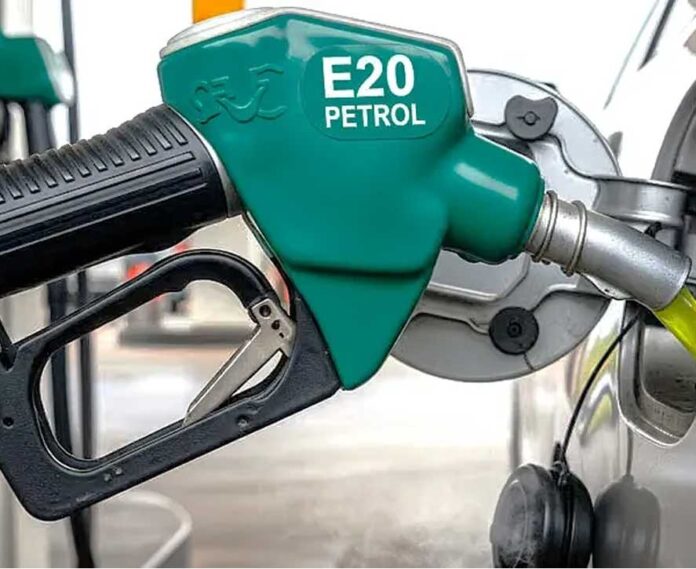
The Bharat Independent Ethanol Producers Association (BIEPA) has raised concerns over the spread of misinformation regarding E20 petrol on social media platforms. The association stated that claims alleging engine damage, reduced mileage, and excessive water consumption due to E20 fuel are not supported by scientific evidence, industry evaluations, or real-world performance data.
BIEPA said the growing volume of conflicting and unverified claims about E20 has created unnecessary confusion among consumers at a time when India’s ethanol blending programme is delivering measurable economic, environmental and energy security benefits. The association said India’s nationwide rollout of E20 petrol marks a significant milestone in the country’s clean energy transition and urged consumers to rely on verified information from the Government of India, vehicle manufacturers, oil marketing companies and scientific institutions rather than unverified online claims.
According to the Ministry of Petroleum and Natural Gas, the Ethanol Blended Petrol (EBP) Programme has helped India save over ₹1.90 lakh crore in foreign exchange since 2014–15 by reducing crude oil imports. The programme has also created a productive market for agricultural by-products and surpluses—including maize, broken rice, molasses and sugarcane—strengthening rural livelihoods while enhancing India’s energy security.
“India’s ethanol programme is built on years of scientific research, extensive vehicle testing and close collaboration between the Government, oil marketing companies, automobile manufacturers and ethanol producers. Consumers should have complete confidence in the quality and safety of E20 fuel sold across the country and rely on verified information rather than misinformation circulating on social media. Misinformation not only creates unnecessary anxiety but also undermines a nationally important programme that is strengthening India’s energy security and supporting millions of farmers,” said Pushpinder Singh, President, BIEPA.
BIEPA also addressed several common misconceptions surrounding E20 fuel, highlighting the following key facts:
- Engine Reliability: According to BIEPA, there is no credible scientific evidence or official investigation linking government-approved E20 petrol to widespread engine damage. The fuel has undergone extensive testing by vehicle manufacturers, the Automotive Research Association of India (ARAI), oil marketing companies, and government agencies, with its performance continuing to be monitored.
- Fuel Efficiency: Although E20 petrol has a slightly lower energy content per litre than conventional petrol, its higher octane rating enables more efficient combustion. As a result, any reduction in fuel economy is typically limited to around 2–6% under normal driving conditions, making claims of significant mileage loss inaccurate.
- Water Usage: BIEPA noted that modern ethanol production facilities employ technologies such as water recycling, condensate recovery, and zero liquid discharge systems to reduce freshwater consumption. The organisation added that India’s ethanol programme increasingly relies on agricultural by-products and surplus feedstocks—including maize, broken rice, molasses, and sugarcane—rather than crops grown exclusively for fuel production, supporting both environmental sustainability and farmer livelihoods.
Additionally, BIEPA clarified that the use of BIS-compliant E20 petrol purchased from authorised fuel stations does not affect vehicle warranties or invalidate motor insurance policies.
BIEPA noted that ethanol-blended petrol has been successfully used for decades in major economies including Brazil (E30), the United States (E15-E18), Japan Indonesia (B50, biodiesel). Almost every country around the world is converting their agricultural excesses into biofuel to reduce dependence on fossil fuels and reduce their carbon emissions. India’s successful transition to E20 further demonstrates that ethanol is a globally accepted transport fuel capable of improving energy security, reducing emissions, supporting farmers and creating rural employment without compromising vehicle performance when used as intended.
The association called upon all stakeholders including consumers, industry, policymakers and media to work together in ensuring that factual, science-based information reaches the public so that misinformation does not hinder one of India’s most important energy transition initiatives.