
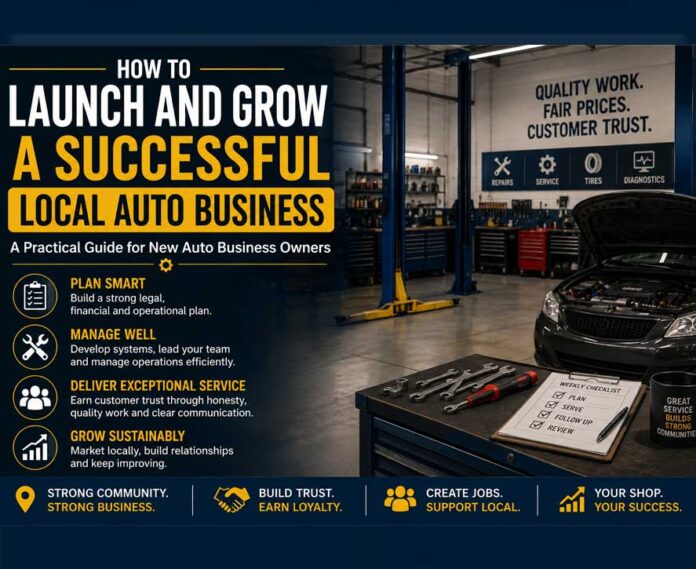
Starting a local auto business can be a rewarding opportunity, but building a successful and sustainable shop requires more than technical expertise. From obtaining the necessary licences and managing startup costs to earning customer trust and maintaining efficient day-to-day operations, new auto business owners need to make informed decisions at every stage.
For aspiring auto entrepreneurs and hands-on local business owners, demand for reliable vehicle repairs, routine servicing and trustworthy customer support remains strong. However, market demand alone does not guarantee a steady flow of business. New auto repair shops must establish a strong reputation while navigating regulations, controlling expenses and delivering consistent service.
With the right strategy, local auto businesses can become valuable community assets by creating jobs, improving access to dependable vehicle services and keeping spending within the local economy. This guide by Elena Stewart explores the key steps to launching and growing a successful auto business, covering legal and financial planning, management, customer relationships and strategies for sustainable growth.
Build Your Legal and Financial Launch Plan
Your goal is a shop that can open confidently and operate without constant “surprise” expenses or compliance stress. This quick sequence helps you line up the rules, permits, and money decisions in the right order so your plan matches real-world requirements.
- Map your legal setup and core licensing
Start by choosing a business structure and confirming the basic business licensing requirements in your area, since this affects taxes, liability, and what paperwork you will file. Write down who issues each license, how long approvals take, and what renewals cost so you are not scrambling after you sign a lease. - List your industry rules and shop-specific permits
Create a one-page checklist of the regulations that typically apply to auto work, like environmental handling, waste disposal, signage, and workplace safety. Then match those rules to your location and services (repairs, tires, diagnostics, detailing) so you apply only for the commercial permits for auto shops you truly need. - Turn your idea into a simple financial plan
Start with a lean plan that covers startup costs, monthly overhead, and the minimum number of jobs you need each week to break even. A detailed business plan gives you a clean place to document pricing, equipment needs, and realistic cash-flow assumptions. - Choose your funding mix and protect your runway
Price out what you can self-fund versus what needs financing, then separate “must-have to open” purchases from “nice-to-have later” upgrades. The reality that 21% launch their venture with less than $5,000 is a useful reminder to start lean, but an auto shop often needs extra cushion for tools, deposits, and the first slow weeks. - Confirm your opening timeline and keep a compliance calendar
Work backward from your target opening date and set deadlines for permits, inspections, insurance, vendor accounts, and initial inventory. Put renewals and reporting dates on a calendar now so staying compliant becomes routine instead of a last-minute fire drill.
Build the Management Muscles That Make Owners Successful
Once your legal and financial plan is set, the next challenge is making smart calls in the day-to-day reality of running the shop. One practical way to boost your business acumen is earning an online business degree, so you’re not just relying on gut instinct when you’re hiring, scheduling, pricing, or handling surprises. A business management degree can strengthen your skills in leadership, operations, and project management, so your team stays aligned and work moves smoothly from intake to delivery. The upside of an online degree is flexibility: you can keep serving customers while building the knowledge and confidence that help you grow. If you want to explore what that path looks like, get the full read.
Plan → Deliver → Follow Up → Improve
A weekly workflow keeps your shop visible, consistent, and calm. It turns big goals like “grow locally” into small actions you can repeat, so customers feel taken care of from the first call to the next visit. Use it as your operating loop across the business life cycle so you keep adjusting as you move from launch to growth.
| Stage | Action | Goal |
| Plan the week | Set bay targets, staffing, promos, and parts reorder points | Fewer surprises and a realistic schedule |
| Serve and document | Run inspections, get approvals, log notes and photos in CRM | Clear decisions and consistent quality |
| Engage the community | Post one tip, reply to reviews, thank referrers | Stay top-of-mind locally |
| Follow up and retain | Text updates, send maintenance reminders, request feedback | More repeat visits and trust |
| Review and adjust | Track close rate, ARO, comeback causes; fix one bottleneck | Small improvements that compound |
Each stage feeds the next: planning protects your capacity, documentation sharpens communication, and follow-up turns a one-time job into an ongoing relationship. The review step keeps the system honest so you do less guessing and more steady refining.
Auto Shop Startup FAQs People Really Ask
Q: What if I don’t have enough money to launch my shop the “right” way?
A: Start lean and protect cash flow: prioritize safety, core tools, and a simple appointment system before upgrades. Ask suppliers about starter terms, consider equipment financing, and negotiate rent and build-out timing. A clean, consistent service experience beats fancy décor early on.
Q: How do I know what insurance I actually need?
A: Begin with general liability coverage because it helps protect you if a customer is injured or property is damaged. Then add coverage based on your risks, like garagekeepers, property, and workers’ comp if you have employees. Put a yearly calendar reminder to review your program so your coverage stays aligned with growth.
Q: How can I compete when nearby shops undercut prices?
A: Compete on clarity and convenience, not just discounts. Offer written estimates, photo documentation, and firm delivery times, then follow up so customers feel looked after. Make it easy to book, approve work, and get updates.
Q: When should I hire my first tech or service advisor?
A: Hire when your schedule is consistently full and quality starts slipping, not when you feel merely busy. Start with part-time or a shared role, and define one measurable outcome like fewer comebacks or faster approvals. Protect your culture by training for your process, not just skill.
Q: What are the most common early mistakes, and how do I recover fast?
A: The big ones are overbooking, unclear estimates, and weak follow-through. Fix it by tightening your intake questions, setting realistic lead times, and documenting every recommendation. If a problem happens, own it quickly, explain the plan, and make the customer feel safe.
Take One Confident Step Toward a Trusted Local Auto Shop
Starting an auto business can feel like a constant tug-of-war between big goals and everyday worries, money, insurance, competition, and getting the first customers to say yes. The steady path is the one this guide has pushed throughout: lead with clear planning, honest service, and relationship-first decisions that earn trust over time. Follow that mindset, and entrepreneurial motivation turns into repeat business, referrals, and a reputation that makes growth feel more predictable. Build trust first, and the rest of the business has something solid to stand on.