The Automotive Skills Development Council (ASDC) has called for a stronger focus on developing a future-ready workforce as India’s automotive industry undergoes rapid transformation driven by electric mobility, advanced manufacturing, artificial intelligence (AI) and Industry 4.0.
The call was made at the 15th Annual Conclave 2026 of ASDC, held in New Delhi under the theme “Skilled Hands, Strong Nation: Building India’s Automotive Future”. The event brought together more than 500 representatives from government, industry, academia and the automotive ecosystem to discuss the evolving skill requirements of the sector.
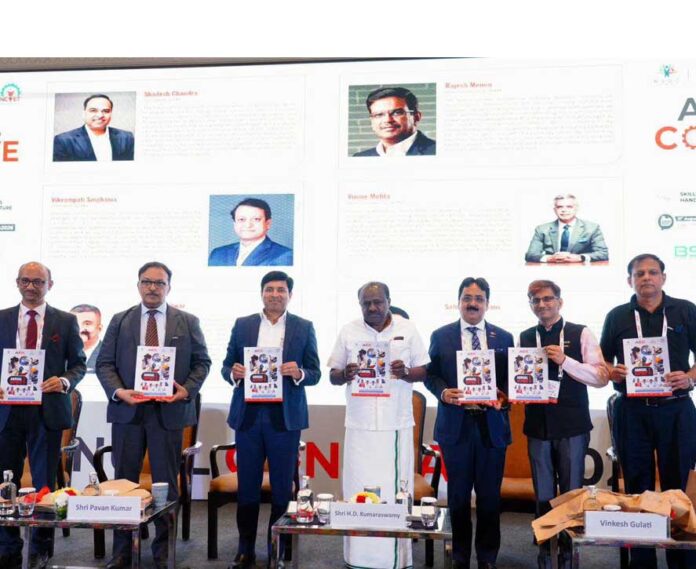
Union Minister of Heavy Industries H. D. Kumaraswamy, who inaugurated the conclave, highlighted the growing employment opportunities emerging across engineering, electronics, components, logistics, software and services as India strengthens its manufacturing capabilities and expands its presence in global value chains.
He said the transition towards electric mobility is creating demand for specialised skills in areas including battery technology, high-voltage systems, power electronics and advanced vehicle diagnostics.
“As India expands its manufacturing capabilities and global value-chain presence, developing a skilled workforce that meets global standards of quality, productivity, safety and innovation is critical,” Kumaraswamy said.
The minister also emphasised the importance of strengthening the connection between education, skill development and employment. He said the Skill India Mission has an important role to play in creating a workforce equipped to meet the changing requirements of the automotive industry.
Automotive Skills Need to Evolve with Technology
Vinkesh Gulati, Chairperson, ASDC, said the automotive industry is at a major inflection point as emerging technologies transform both vehicles and manufacturing operations.
“Electric mobility, advanced manufacturing, AI and Industry 4.0 are rapidly reshaping not only vehicles and factories, but also the skills required across the automotive value chain. Our focus at ASDC is to ensure that skilling evolves at the same pace as technology,” Gulati said.
He added that the success of skilling programmes should not be measured solely by the number of people trained. Instead, their impact should also be assessed through employability, workplace productivity and long-term career opportunities.
ASDC Expands Focus on EV and Emerging Technologies
ASDC’s Performance Report for 2025-26 highlighted the council’s efforts in areas such as industry partnerships, women’s participation, academia-industry collaboration, emerging technologies and employment-linked skilling.
As part of its focus on electric mobility, ASDC has established seven EV skill labs across India and internationally. These include facilities in Chennai, Vadodara and South Africa. The labs are designed to provide hands-on exposure to emerging automotive technologies while preparing workers to meet the requirements of both domestic and global automotive markets.
During the conclave, ASDC also exchanged Memorandums of Understanding (MoUs) with Kia Motors India, Kukje Business Solution and Rossik East Europe, Shell India and Lucas India Service.
The event also featured the launch of ASDC’s Annual Report 2025-26, the flag-off of candidates travelling to Romania and a convocation ceremony.
Industry Panels Focus on Skills and Employment
Two industry panels addressed key challenges facing India’s automotive skills and employment ecosystem.
The first panel, titled “The Last Mile Workforce: Building a Pipeline of Technicians and Entrepreneurs”, examined the growing requirement for skilled technicians and entrepreneurs as the automotive industry expands and adopts new technologies.
The second panel, “From Training to Employment: Strengthening the Skill-to-Industry Pipeline”, focused on improving the transition from training programmes to actual employment. Discussions covered job readiness and the need for closer alignment between industry requirements and the country’s skilling ecosystem.
With EV adoption, software-defined vehicles, connected technologies and advanced manufacturing gaining momentum, the automotive industry is expected to require a workforce with increasingly specialised technical and digital capabilities. ASDC’s conclave highlighted the importance of ensuring that India’s skilling ecosystem keeps pace with these changes to support the sector’s future growth.