
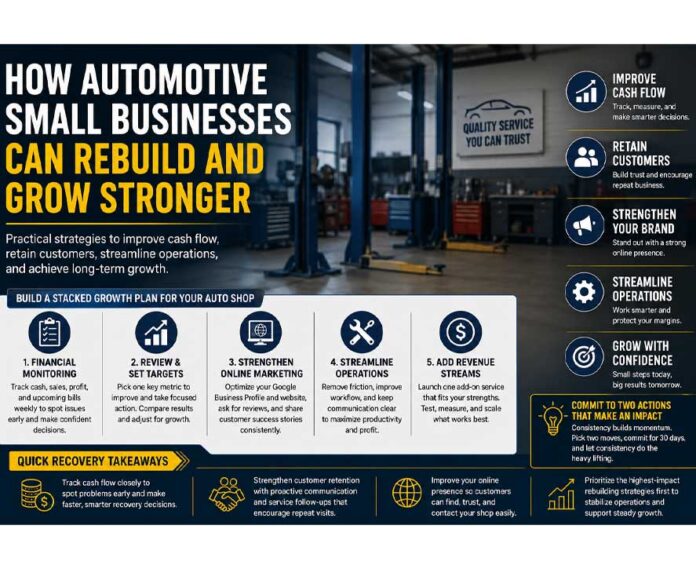
Running an automotive small business has become increasingly challenging amid fluctuating customer demand, rising operating costs, supply chain disruptions, and changing consumer expectations. Independent repair shops, mobile technicians, and automotive service providers are under constant pressure to manage cash flow, control expenses, and maintain profitability in an increasingly competitive market. While these challenges can strain day-to-day operations, they also present an opportunity to reassess business strategies, improve efficiency, and build a stronger foundation for long-term growth.
In this guest article, Elena Stewart outlines practical strategies to help automotive entrepreneurs navigate financial uncertainty and rebuild with confidence. From improving cash flow management and strengthening customer relationships to streamlining operations and enhancing brand visibility, she explains how focusing on the right priorities can help small automotive businesses overcome immediate challenges while positioning themselves for sustainable growth.
Quick recovery takeaways
- Track cash flow closely to spot problems early and make faster, smarter recovery decisions.
- Strengthen customer retention with proactive communication and service follow-ups that encourage repeat visits.
- Improve your online presence so customers can find, trust, and contact your shop easily.
- Prioritize the highest-impact rebuilding strategies first to stabilize operations and support steady growth.
Refresh your brand fast: A simple logo upgrade that builds trust
Once you’ve identified the recovery actions that will move the needle, a fast way to strengthen customer confidence is upgrading the brand elements they notice first, especially your logo. A logo refresh is worth it when you’re rebuilding and need to make a stronger first impression, boost brand awareness, and clearly separate your shop from competitors. The good news is you don’t have to pay for logo design services to get a more polished look. You can design an appealing, creative logo yourself with an online tool like this free logo creator.
Start by choosing a style and an icon that fits your business, then add the text you need. From there, you’ll be able to view multiple logo options and fine-tune details like fonts and colors until the mark feels clean and consistent. With an updated logo, you can present the same professional identity anywhere customers find you, on your website, Google Business Profile, signage, and social channels.
Build a stacked growth plan for your auto shop
This process helps you monitor money, tighten operations, and market more consistently so each improvement supports the next instead of competing for attention.
- Set up simple financial monitoring
Start by tracking four numbers weekly: cash on hand, sales, gross profit, and bills due in the next 14 days. Build a baseline and look for patterns because many shops face dips and surprises, and revenue drops by 32% during slow seasons can strain payroll and parts purchases. Use this snapshot to decide what you can afford to change right now. - Review performance and pick one target
Choose one bottleneck to fix first, such as car count, average repair order, or hours billed per tech. Compare last month to the same month last year and write down one specific goal plus the two actions that most influence it. A single target keeps your team aligned and makes results easier to spot. - Strengthen online marketing where customers decide
Confirm your business info is accurate everywhere, then focus on two channels: Google Business Profile and your website service pages. Ask every satisfied customer for a review using the same script at checkout, and post one before and after job story each week to show proof of quality. Consistency beats complexity because it compounds trust over time. - Streamline operations to protect margin
Map your service flow from appointment to delivery and remove one friction point, such as unclear authorizations or parts delays. Add a daily 10 minute huddle to confirm today’s jobs, needed parts, and who owns each update to the customer. Fewer rechecks and fewer stalled vehicles free up bays for revenue producing work. - Add one revenue stream that fits your strengths
Pick one add on that uses the skills and space you already have, such as maintenance packages, fleet service, pre purchase inspections, or seasonal checkups. Test it for 30 days with a clear offer, a simple tracking sheet, and a plan to stop or expand based on results. Growth is easier to justify when the broader automotive repair and maintenance service market was valued at US$ 890.82 billion in 2024, but your offer still needs a small, measurable pilot.
Weekly habits that keep recovery moving
Habits turn your rebuild plan into something you can actually repeat when the week gets busy. Pick a few that fit your shop and stick with them long enough to see the trend.
Monday Money Snapshot
- What it is: Record cash, last week’s sales, gross profit, and upcoming bills on one sheet.
- How often: Weekly
- Why it helps: You spot stress early and make calmer decisions.
One-Metric Scoreboard
- What it is: Track one number that matches your current goal, then post it where everyone sees.
- How often: Weekly
- Why it helps: Focus improves follow-through and reduces random “urgent” work.
Ten-Minute Flow Fix
- What it is: Choose one step to simplify using optimization of business processes.
- How often: Weekly
- Why it helps: Small friction cuts add capacity without adding payroll.
Review Ask at Checkout
- What it is: Use the same sentence to request a review from every happy customer.
- How often: Daily
- Why it helps: Steady social proof lifts calls and bookings.
Add-On Pilot Log
- What it is: Track offers, takers, and margin for one add-on you are testing.
- How often: Per job
- Why it helps: You expand winners and stop losers quickly.
Commit to two actions that strengthen your shop’s recovery
Market swings, rising costs, and shifting customer expectations can make it feel like progress is fragile and hard-won. The path forward is a steady, habits-first approach that builds automotive business resilience through clear priorities, consistent measurement, and customer-focused follow-through, turning small business empowerment into practical momentum. When recovery strategy implementation becomes routine, decisions get simpler, cash flow steadies, and business rebuilding confidence grows week by week. Pick two moves, commit for 30 days, and let consistency do the heavy lifting.