
A recent report by the Society of Indian Automobile Manufacturers highlights growing pressure on the automotive sector, as escalating geopolitical tensions and rising commodity prices begin to impact profitability.
While vehicle sales have remained relatively stable so far, supply disruptions and input cost inflation are starting to erode margins across the industry. For instance, SML Isuzu reported a 130 basis point impact on its Q4 FY26 margins due to rising input costs. Although the company implemented price hikes of 2–3% in early FY27, it expects cost pressures to persist.
Energy Costs Surge
The sharp rise in crude oil prices has emerged as a major concern. In March 2026, Brent crude averaged $103.13 per barrel, reflecting significant year-on-year and month-on-month increases. This spike, driven by fears of supply disruptions in the Strait of Hormuz, has increased logistics and transportation costs—critical factors for the auto industry.
Steel and Metal Prices Climb
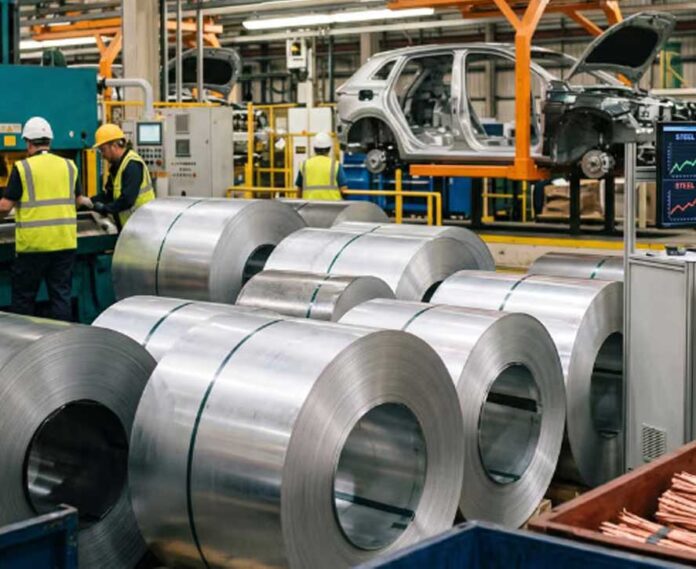
Steel, a core raw material in vehicle manufacturing, has also seen notable price increases. Hot-rolled steel rose 11% year-on-year to ₹58,625 per tonne, while cold-rolled steel recorded even steeper gains.
Non-ferrous metals have followed a similar trend. Aluminium prices surged 27% to $3,370 per tonne, and copper rose 28% to $12,499 per tonne. These increases significantly impact production costs, particularly as automakers increasingly rely on lightweight materials and electrification components.
Precious Metals and Battery Materials Add Pressure
The cost of key precious metals has escalated sharply, further complicating the transition to cleaner mobility. Platinum prices have jumped 124%, while rhodium has risen 121%. Meanwhile, lithium carbonate prices have more than doubled, increasing by 109%, raising concerns for electric vehicle production costs.
Rubber and Currency Impact
Even tyre manufacturing inputs are under pressure, with natural rubber prices rising 10% to ₹217.35 per kg. At the same time, the depreciation of the Indian rupee—from ₹86.63 to ₹92.12 against the US dollar—has increased the cost of imported components, adding another layer of financial strain.
Outlook: Rising Costs Threaten Growth Momentum
Despite steady production levels, the cumulative impact of rising input costs, higher freight rates, and global uncertainties poses a significant challenge. With shipping costs elevated and supply chains under stress, the industry faces a critical phase.
If geopolitical tensions persist, these pressures could slow down growth and test the sustainability of India’s affordable mobility ecosystem, making cost management and strategic pricing crucial for automakers in the months ahead.