
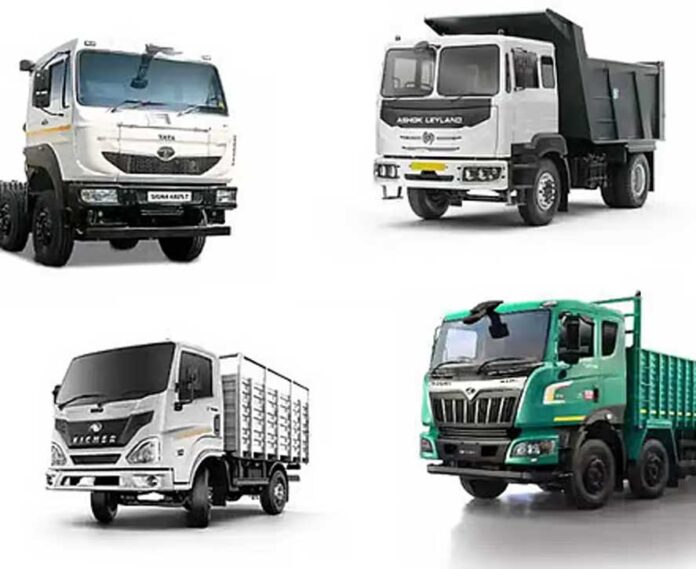
India’s commercial vehicle (CV) industry is on track to achieve a new milestone, with volumes projected to reach around 12.4 lakh units in FY27, surpassing the previous peak recorded in FY19, according to CRISIL Ratings.
Following a strong 13% rebound in FY26, growth is expected to moderate to 5–6% in FY27, largely due to a higher base effect. Despite this, domestic demand is likely to remain robust, supported by continued infrastructure development, replacement demand, and improved affordability after the reduction in GST rates.
Domestic Demand Remains Key Driver
The domestic market continues to dominate the CV sector, accounting for nearly 92% of total volumes. Growth will be primarily led by light commercial vehicles (LCVs), which make up around 60% of the segment. LCV volumes are expected to grow 5–6%, driven by the rise of e-commerce and last-mile delivery demand.
Medium and heavy commercial vehicles (MHCVs) are projected to grow at a slightly slower pace of 4–5%, supported by freight movement and ongoing infrastructure activity. However, the commissioning of dedicated freight corridors may impact long-haul trucking demand.
Shift Towards Higher Payload Efficiency
Within the LCV segment, there is a clear shift toward higher-capacity vehicles. Models above 2 tonnes gross vehicle weight now account for about 73% of the segment, up from 60% in FY20, reflecting a growing preference for better payload efficiency.
Bus Segment and Electrification
The bus segment is expected to grow 3–4% in FY27, driven by replacement demand and government-led electric bus procurement. Electrification in buses is likely to advance faster compared to other CV segments, although overall penetration remains low.
Exports to Slow Amid Global Challenges
Exports, which contribute around 8% of total volumes, are expected to see a sharp slowdown. Growth is projected at 2–4% in FY27, down from nearly 17% in FY26. This moderation is largely due to disruptions in West Asia, a key export market, where shipping challenges are delaying dispatches.
Margins Under Pressure
While revenue growth may slightly outpace volume growth due to price hikes, rising input costs—including steel, aluminium, and fuel—are expected to weigh on profitability. Operating margins could decline by 40–50 basis points from around 12% in FY26.
Additional cost pressures are also expected from regulatory requirements such as Advanced Driver Assistance Systems (ADAS), Corporate Average Fuel Efficiency (CAFE) norms, and upcoming emission standards.
Investment and Outlook
The industry’s capital expenditure is estimated at around ₹5,500 crore in FY27, in line with the previous year, with investments focused on modernisation and regulatory compliance.
Despite moderating growth and margin pressures, the sector’s overall credit outlook remains stable, supported by healthy cash flows and strong balance sheets, signalling resilience in India’s commercial vehicle industry.