
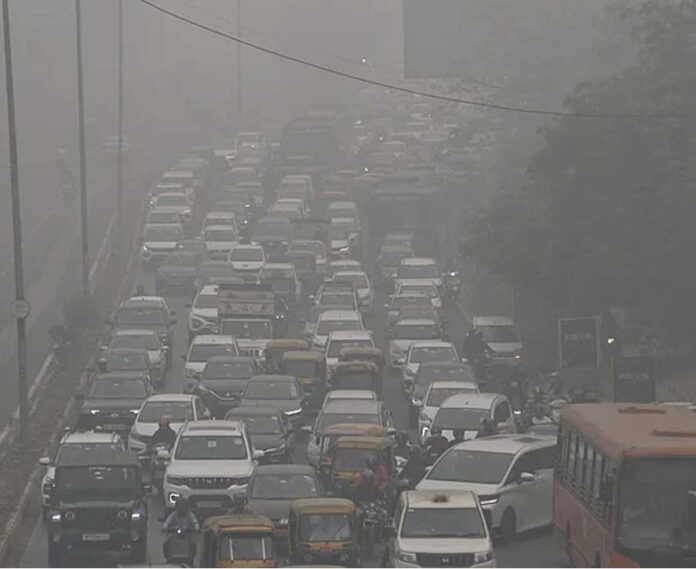
India’s air pollution challenge is once again coming into focus as air quality deteriorates across Delhi with the approach of the winter pollution season. Delhi’s 24-hour average AQI rose from 118 on September 19 to 178 on September 22, according to data from the Delhi Pollution Control Committee.
Vehicular emissions are among the sources contributing to urban air pollution, adding to concerns around public health, energy consumption and climate commitments. The situation has renewed calls for cleaner mobility and fuel technologies that can deliver measurable reductions in emissions.
Delhi has also stepped up measures to address pollution and dust, including the deployment of anti-smog guns. Government tender documents show plans for hundreds of truck-mounted anti-smog guns across multiple areas of the capital for the 2026–29 period.
Clean-mobility stakeholders argue that short-term pollution-control measures need to be complemented by longer-term solutions, including EV charging infrastructure, cleaner fuels and certified Auto LPG retrofits.
The broader focus is shifting towards solutions that can reduce emissions from vehicles while supporting India’s transition towards a lower-emission mobility ecosystem.
Speaking recently on Zero Emissions Day, Mr. Akshit Bansal, Founder & CEO of Statiq, emphasized the role of electric mobility: “Zero Emissions Day is a reminder that India’s clean‑mobility transition must deliver real emission cuts today, not just promises for tomorrow. With road transport heavily dependent on fossil fuels, every kilometre driven on petrol and diesel adds to urban pollution, import bills and climate risk.
At Statiq, we believe electric mobility is the backbone of a zero‑emission future, but it must be enabled by reliable, everyday charging infrastructure. By installing chargers where people live, work and travel residential societies, workplaces, highways and city hubs we are making EVs convenient, affordable and range‑anxiety free.
India does not have to wait for an overnight fleet replacement to start reducing emissions. Expanding public and destination charging, enabling smart tariffs, and encouraging faster adoption of two‑wheelers, three‑wheelers, buses and commercial EVs can cut urban pollution and transport costs in the near term.
On Zero Emissions Day, our call is clear: adopt an outcome‑based clean‑mobility strategy that prioritises measurable emission reductions. Electric mobility, backed by dense and reliable charging networks, must sit at the centre of this strategy, complemented by cleaner fuels and efficiency measures where appropriate so India can deliver cleaner air, lower mobility costs and stronger energy security for future generations.”
Similarly, Mr. Suyash Gupta, Director General of the Indian Auto LPG Coalition, highlighted the importance of cleaner fuels for India’s existing fleet: “Zero Emissions Day is a reminder that India’s clean-mobility transition must combine long-term ambition with practical solutions that can reduce emissions today. With more than 33 crore petrol and diesel vehicles already on our roads, waiting for complete fleet replacement is neither economically feasible nor environmentally sufficient. India needs a technology-neutral strategy that improves the performance of vehicles already in use while accelerating electric mobility and other cleaner alternatives.
Auto LPG offers a proven, affordable and immediately deployable pathway for suitable vehicles in the existing fleet. It produces almost negligible particulate matter, can reduce NOx emissions by nearly 80% compared with petrol, and offers a 40–45% reduction in running costs. This makes it particularly relevant for high-use vehicles such as taxis, three-wheelers, delivery vehicles and older petrol cars, where lower fuel costs and emissions can deliver immediate economic and public-health benefits.
A national retrofitment policy, lower GST on certified conversion kits, streamlined approvals, robust safety standards, financial support for vehicle owners and greater OEM participation can help scale this transition. Auto LPG should complement, not compete with, electric mobility by providing near-term emission reductions while charging infrastructure and clean-energy capacity continue to expand.
On Zero Emissions Day, India must move beyond a single-technology approach and adopt an outcome-based clean-mobility strategy. By encouraging certified Auto LPG retrofitment alongside EVs and other clean-fuel solutions, we can reduce urban pollution faster, lower mobility costs and advance the country’s climate, energy-security and public-health goals.”
This Zero Emissions Day, India’s clean‑mobility leaders unite to call for urgent, collective action. From EV infrastructure to Auto LPG retrofits, the message is clear: sustainability is not optional; it is essential. By embracing zero‑emission and low‑emission solutions and supporting transformative technologies, India can lead the way in building a healthier, resilient, and low‑carbon future.