
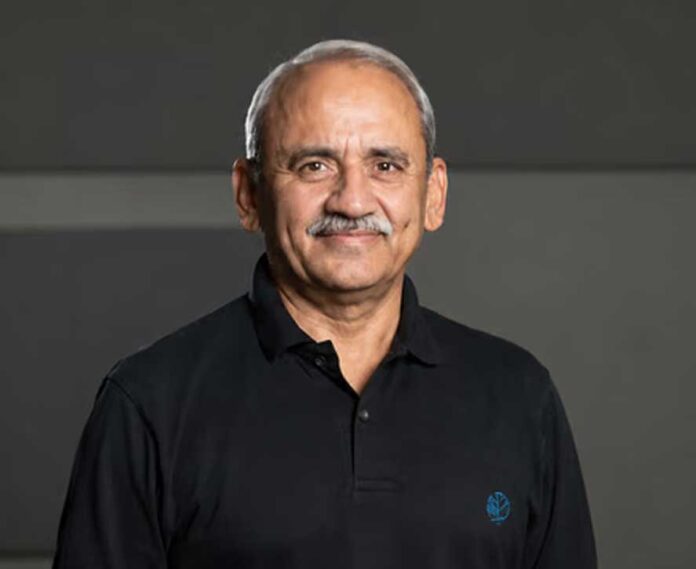
Bajaj Auto Limited has announced the elevation of Rakesh Sharma from Executive Director to Joint Managing Director, effective June 1, 2026. The appointment, approved by the company’s Board of Directors on May 6, 2026, will remain valid until March 31, 2029, subject to shareholder approval at an upcoming general meeting.
The decision was approved during a board meeting held at Bajaj Auto’s registered office in Akurdi, Pune, following recommendations from the company’s Nomination and Remuneration Committee.
Expanded Leadership Responsibilities
In his new role as Joint Managing Director, Sharma will continue overseeing his current business operations while taking charge of two additional strategic functions — Digital & IT and Legal.
The company’s Digital & IT division, which is responsible for driving Bajaj Auto’s digital transformation initiatives, will now report directly to Sharma, alongside the Legal function.
The restructuring signals Bajaj Auto’s intent to align technology, digital transformation, and legal operations more closely with its core business strategy and commercial priorities.
Sharma will continue to report to Managing Director Rajiv Bajaj, maintaining the existing leadership structure at the top of the organisation.
Strategic Shift Toward Integrated Digital Leadership
The decision to place Digital & IT under the Joint Managing Director’s leadership reflects a broader strategic direction increasingly seen across large manufacturing and automotive companies.
By integrating digital transformation under mainstream business leadership rather than treating it as a standalone support function, Bajaj Auto appears focused on accelerating technology-driven business innovation and operational efficiency.
The move also highlights the growing importance of digitalisation, connected systems, and technology-led decision-making in the evolving automotive industry landscape.
Nearly Two Decades at Bajaj Auto
Rakesh Sharma brings more than 40 years of professional experience to the role and has been associated with Bajaj Auto for nearly 19 years.
He joined the company in October 2007 as President – International Business, where he played a key role in expanding Bajaj Auto’s global footprint across Africa, Latin America, South Asia, and Southeast Asia.
Under his leadership, the company strengthened its position as one of India’s largest exporters of two-wheelers and three-wheelers.
In July 2018, Sharma was elevated to Chief Commercial Officer, taking on broader responsibilities across Bajaj Auto’s business operations. He was subsequently appointed Executive Director in January 2019.
Regulatory Disclosures and Governance Compliance
As part of regulatory requirements under SEBI Listing Regulations and the SEBI Master Circular dated January 30, 2026, Bajaj Auto filed detailed disclosures regarding Sharma’s appointment with both stock exchanges.
The company confirmed that Sharma has no familial or financial relationship with any member of the Board and is not debarred from holding a directorial position by SEBI or any other regulatory authority.
The filing was signed by Rajiv Gandhi, Company Secretary and Compliance Officer of Bajaj Auto.
Leadership Transition Signals Broader Organisational Evolution
The elevation of Sharma to Joint Managing Director marks one of Bajaj Auto’s most notable leadership changes in recent years.
The introduction of a Joint Managing Director role between the Managing Director and other executive leadership positions suggests the company is preparing its management structure for greater operational complexity, technological integration, and future business expansion.
The move also reinforces Bajaj Auto’s focus on strengthening leadership bandwidth as the automotive sector undergoes rapid transformation driven by electrification, digital technologies, software integration, and global market expansion.